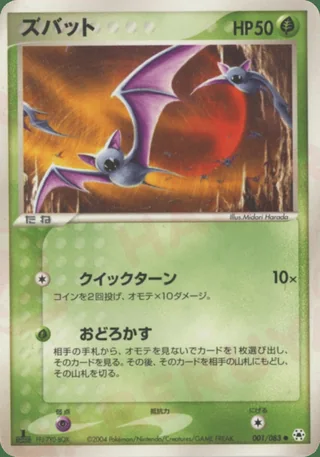
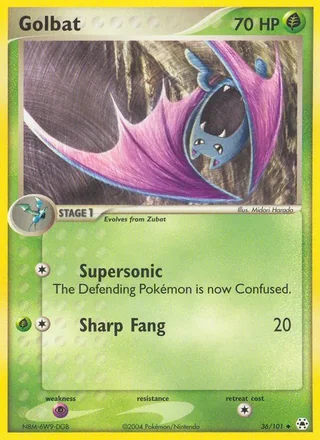
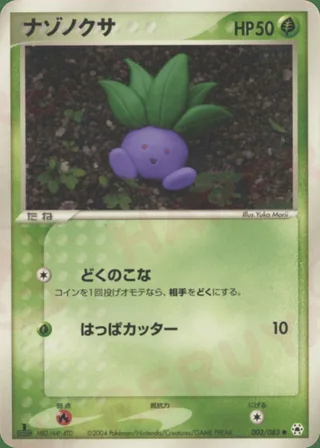
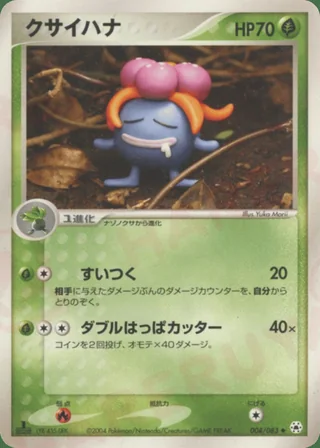
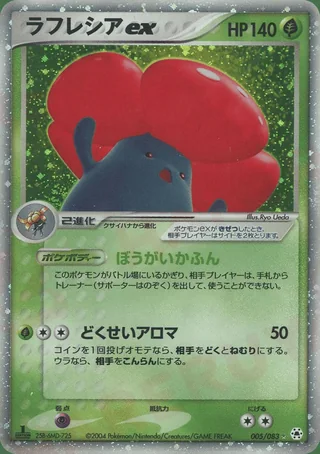
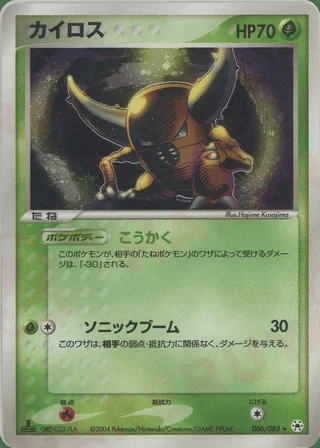
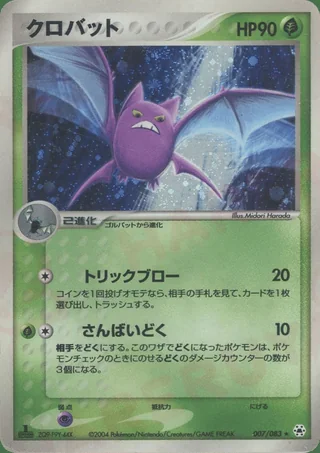
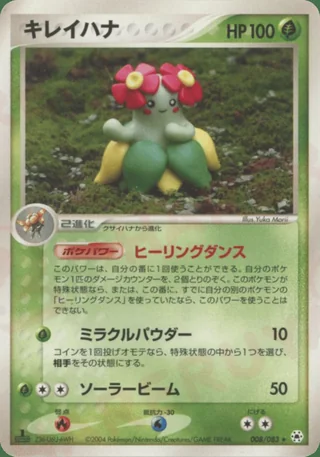
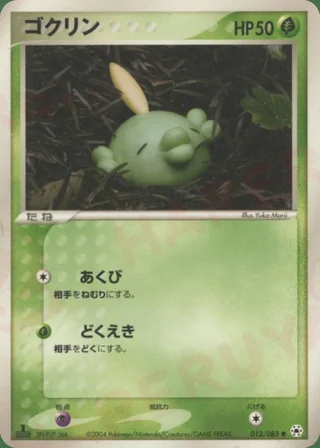
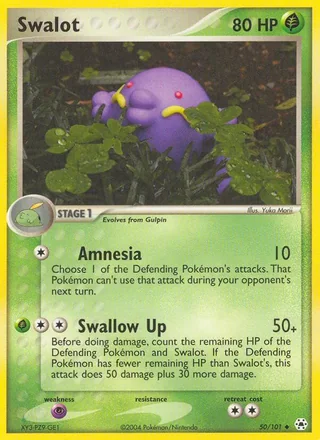
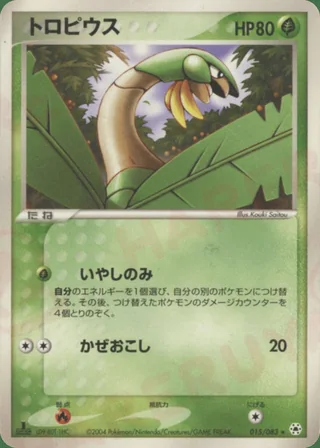
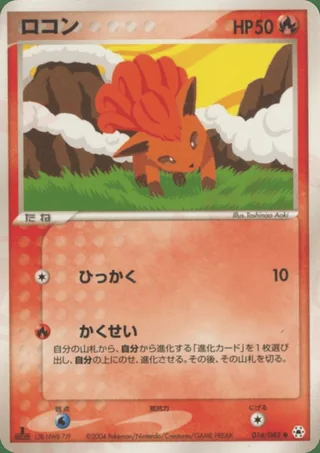
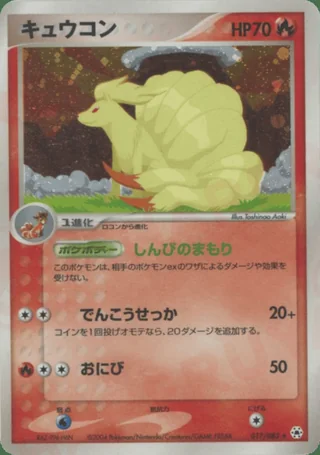
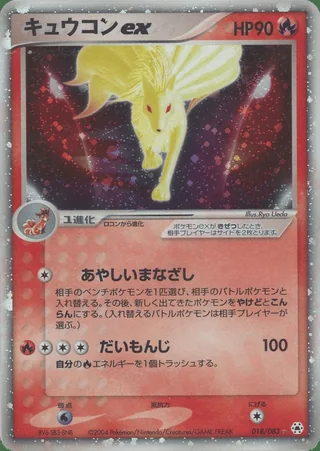
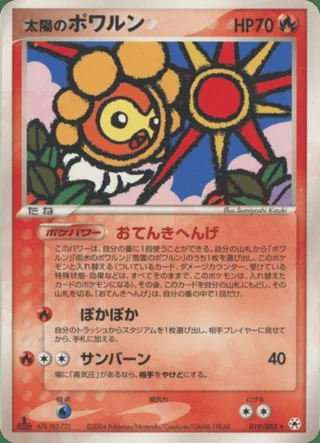
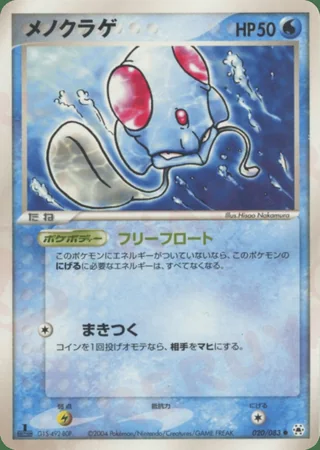
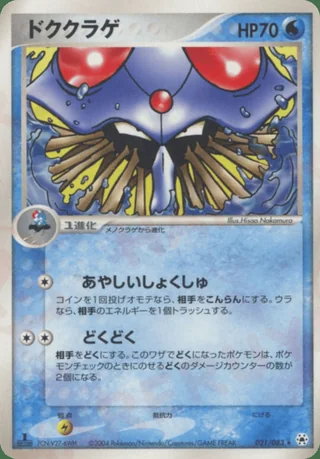
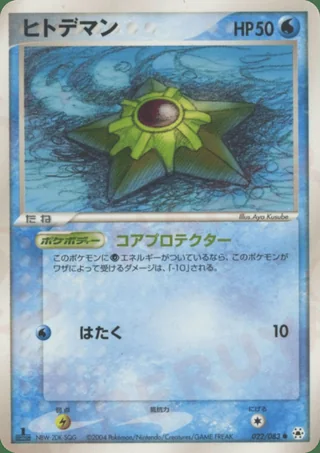
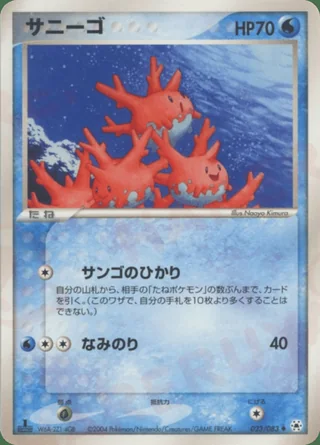
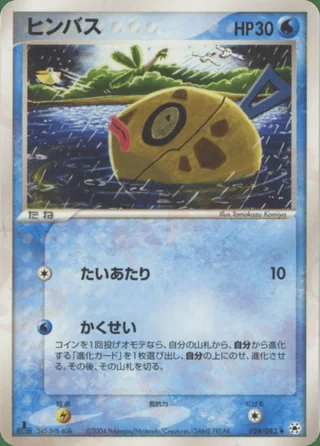
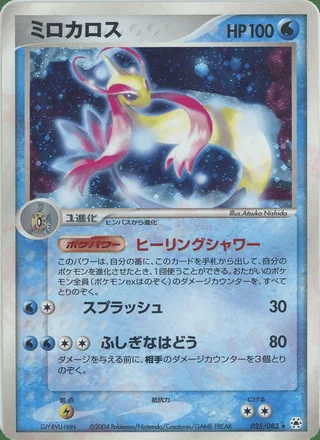
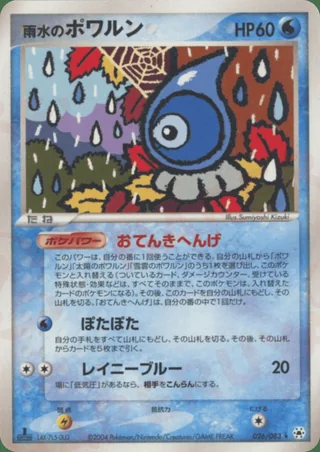
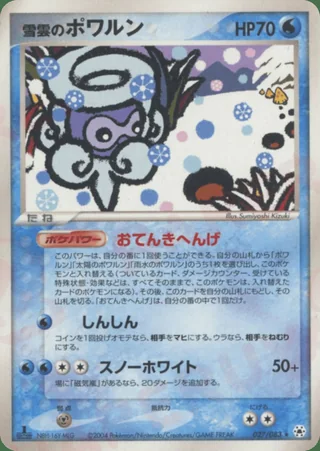
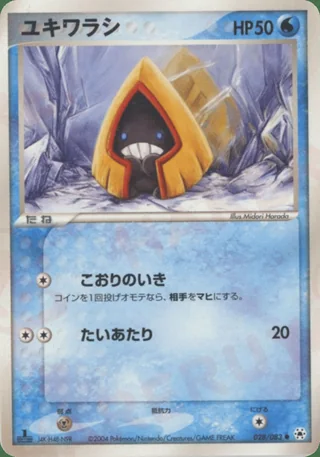
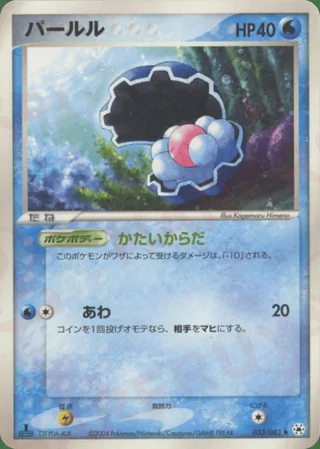
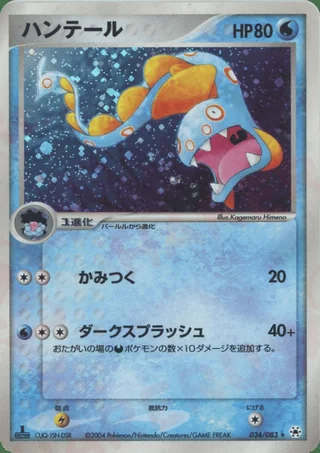
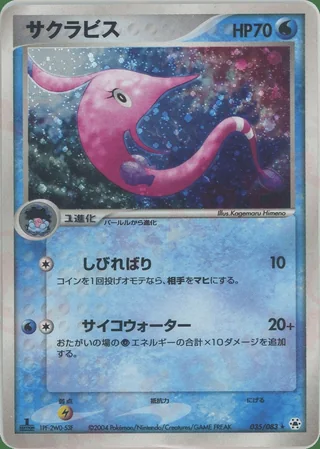
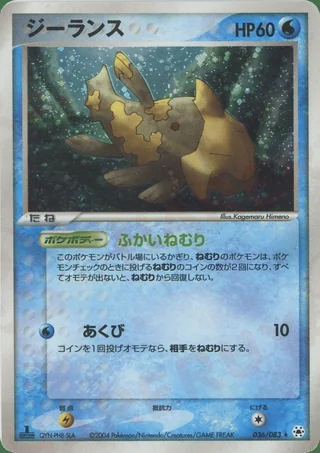
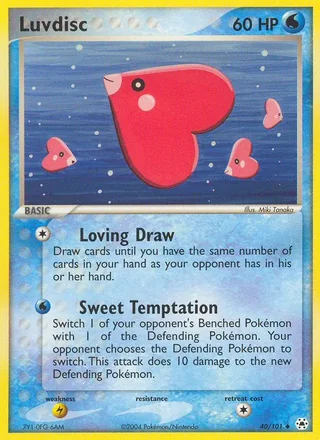
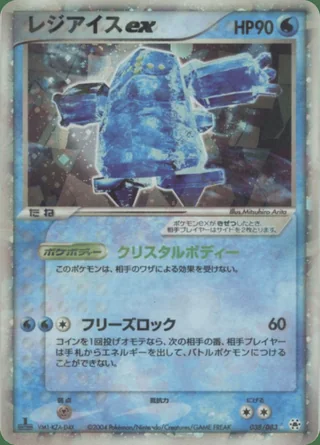
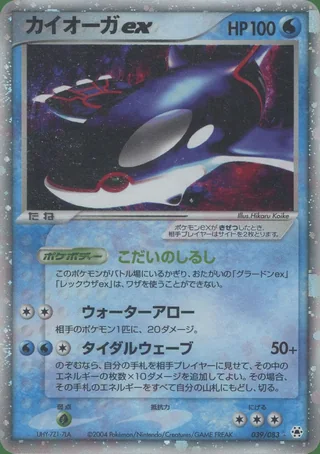
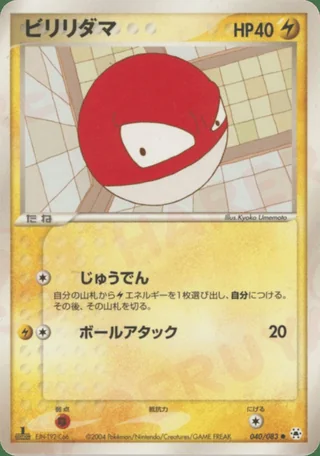
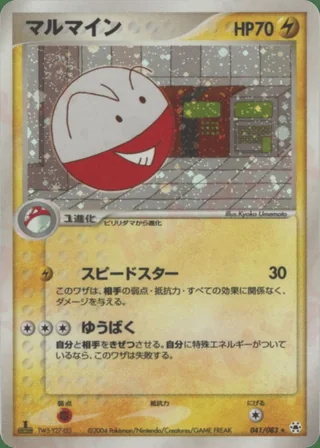
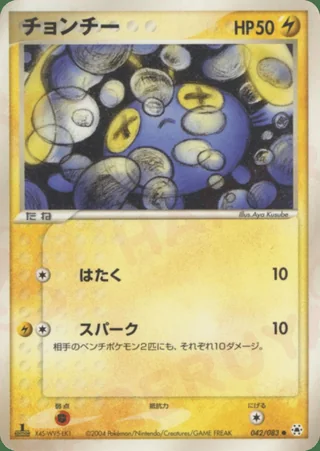
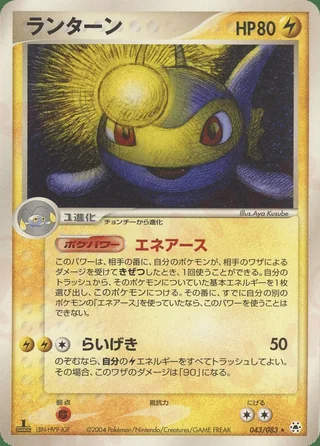
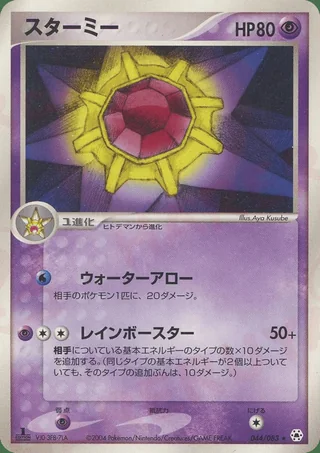
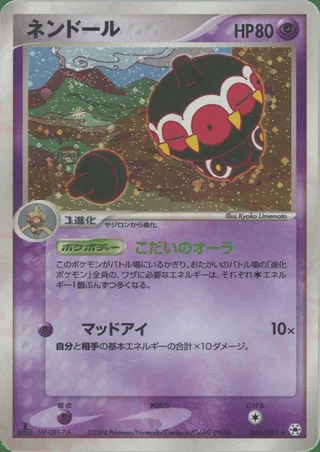
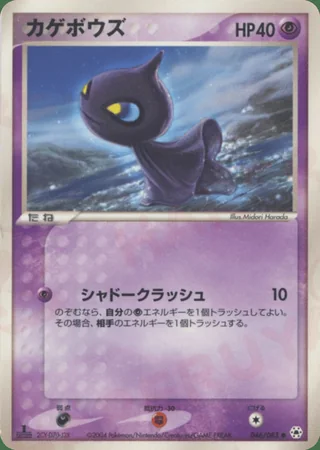
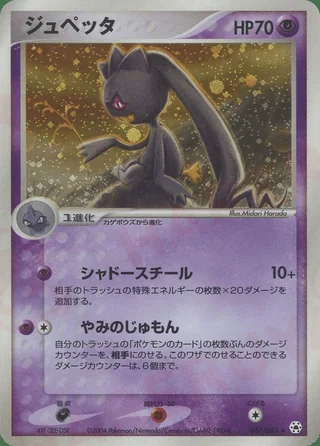
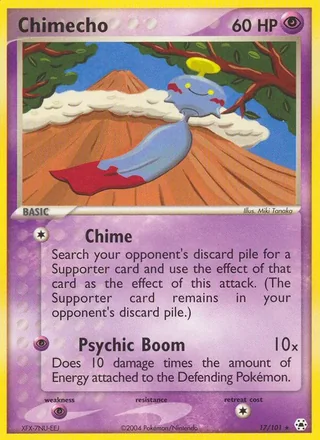
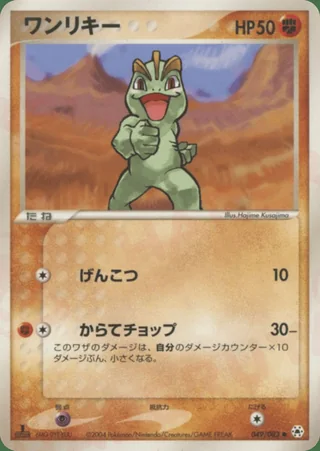
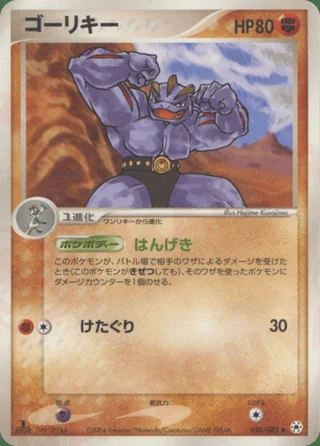
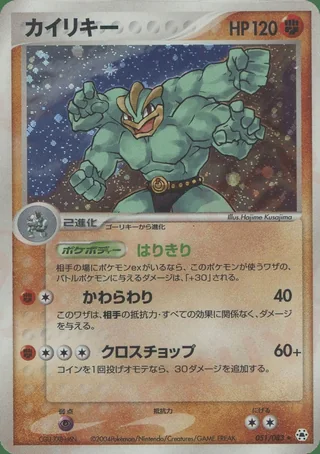
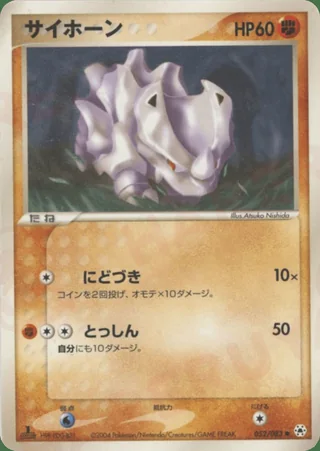
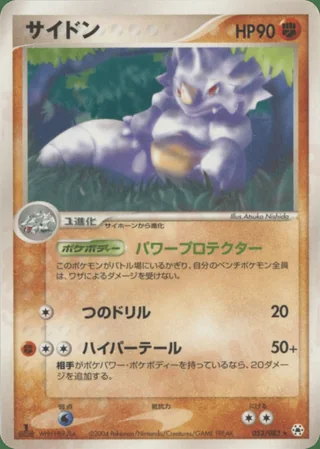
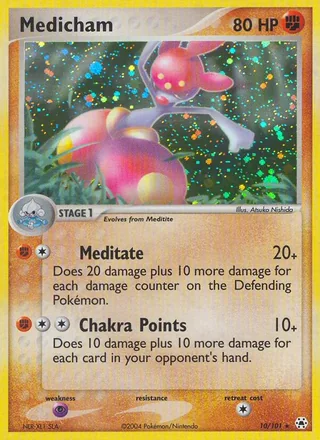
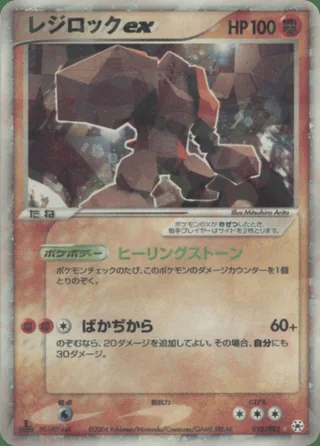
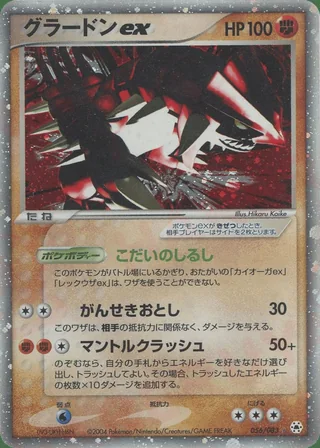
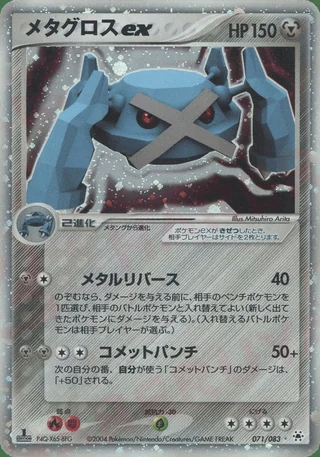
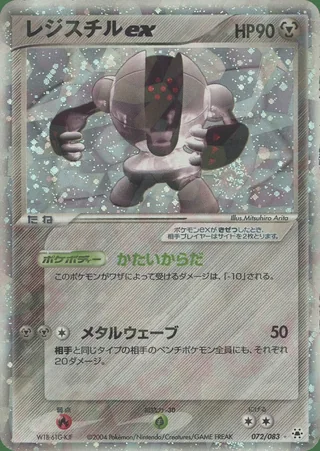
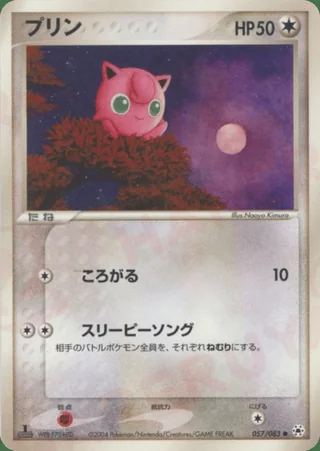
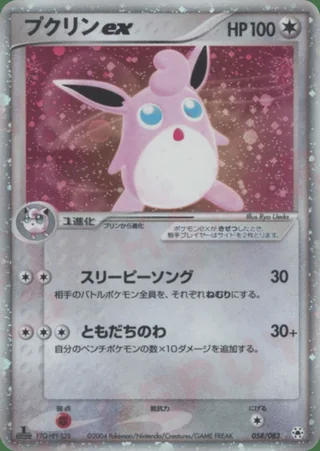
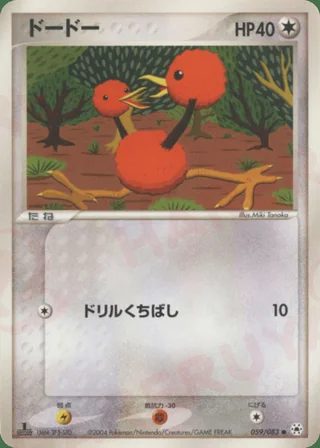
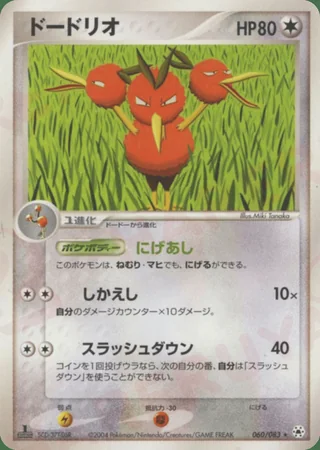
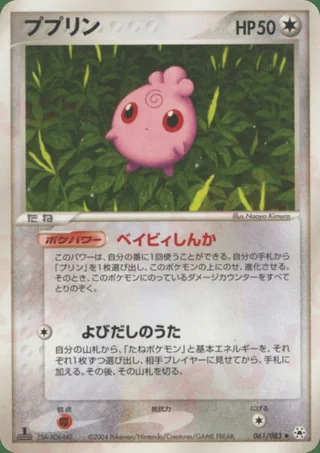
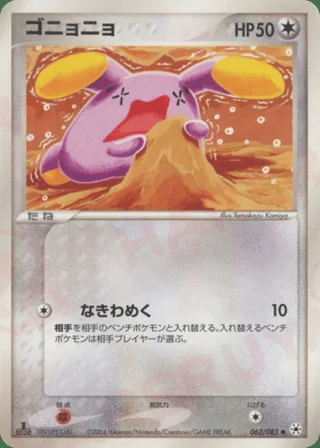
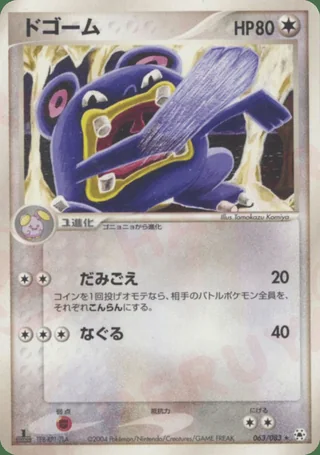
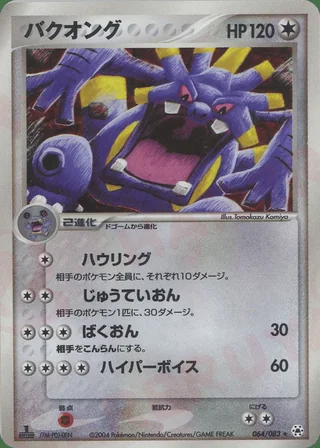
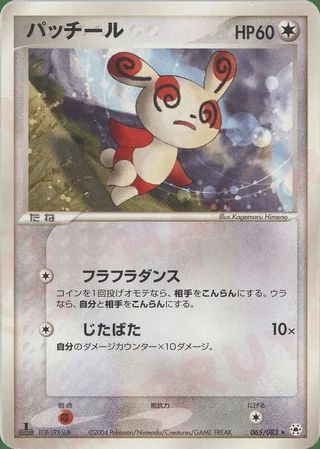
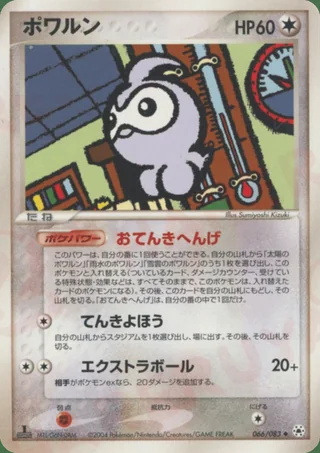
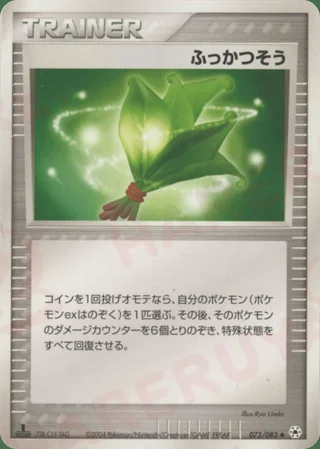
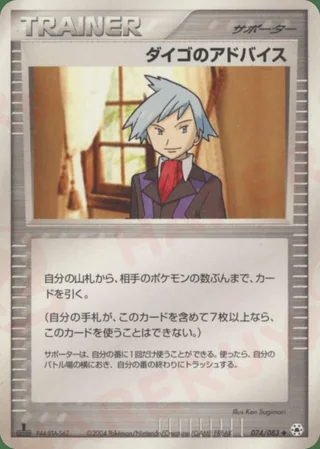
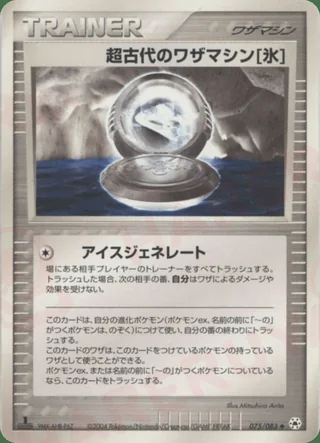
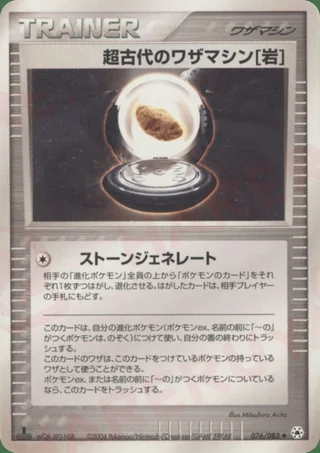
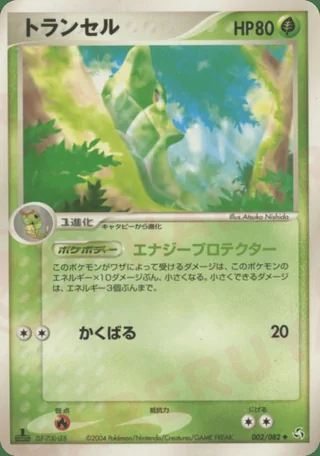
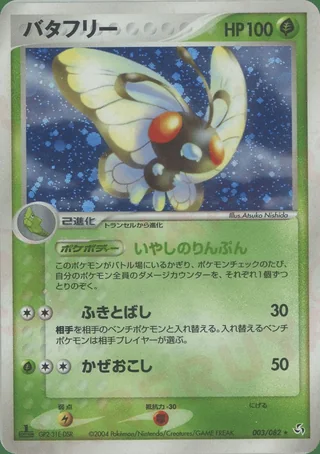
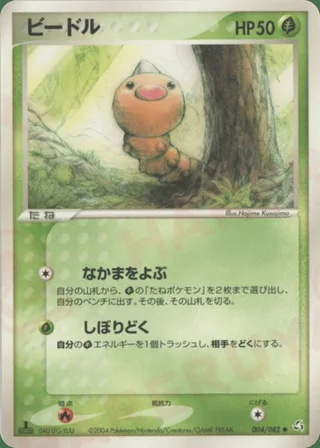
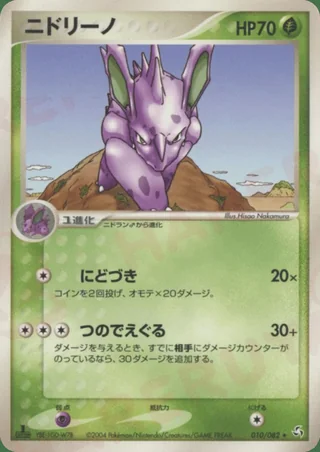
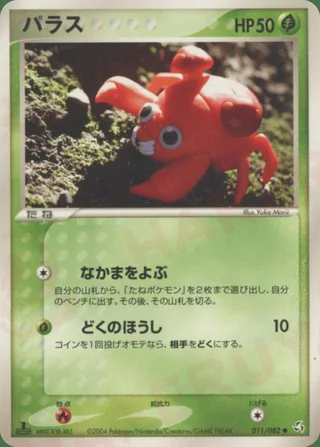
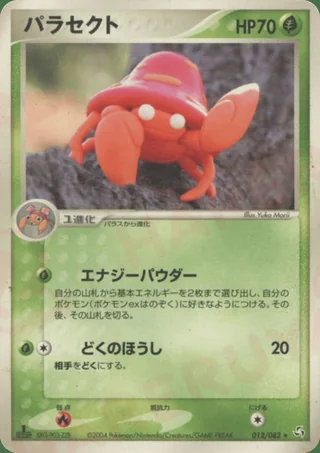
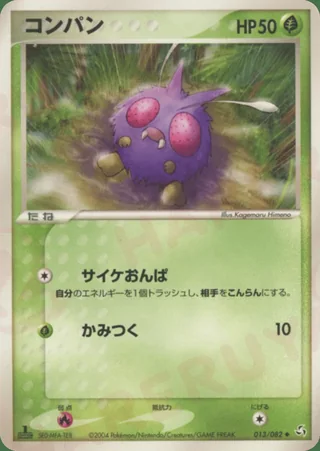
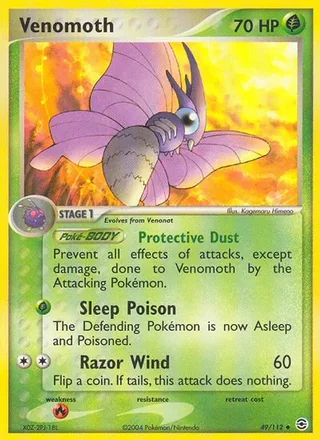
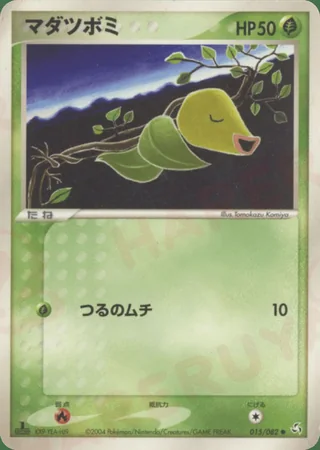
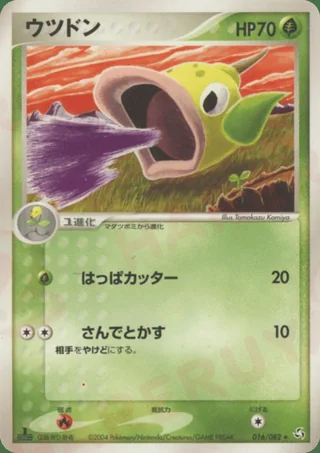
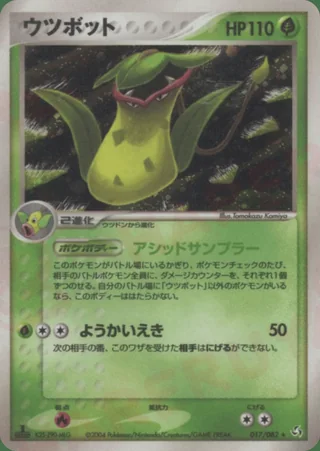
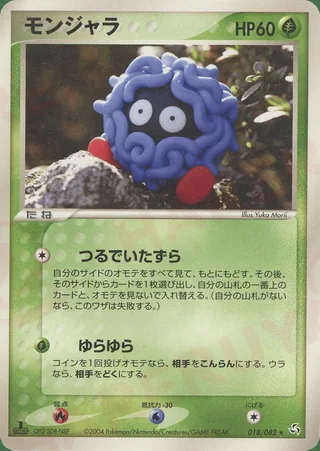
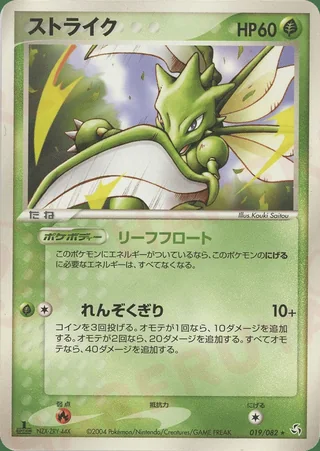
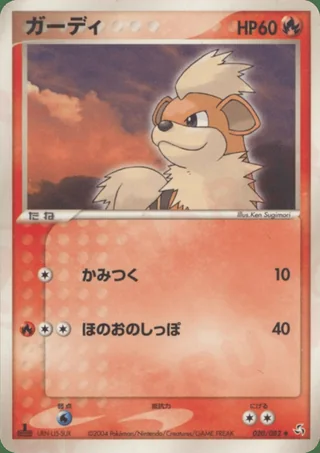
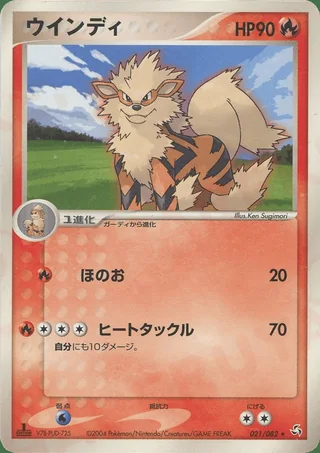
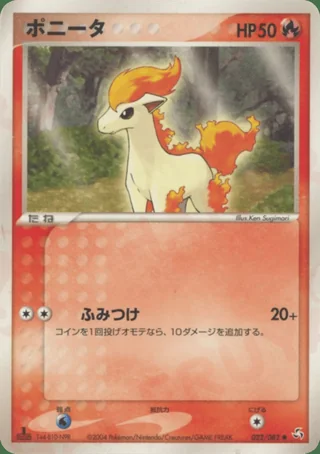
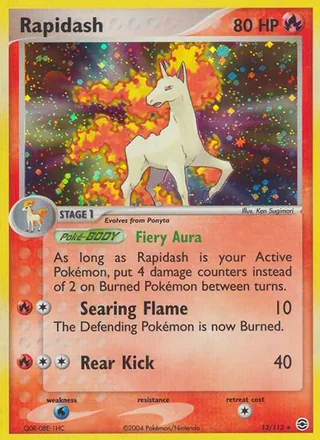
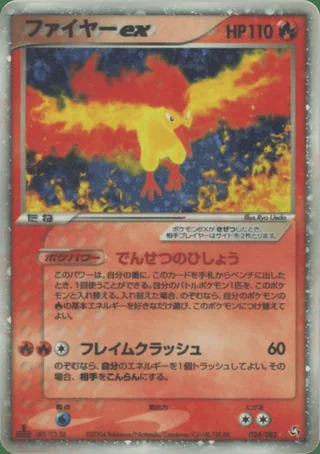
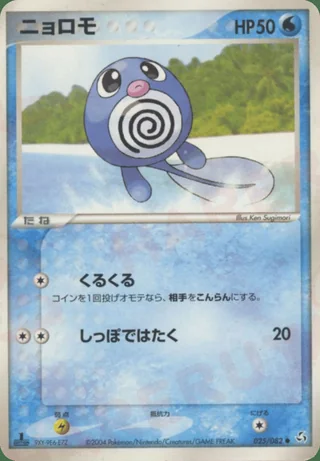
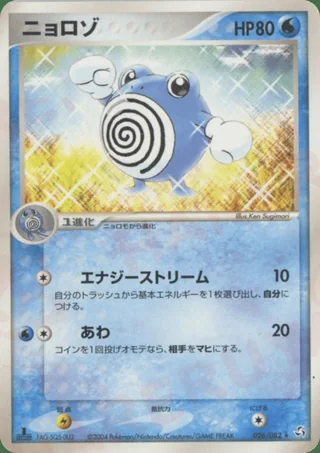
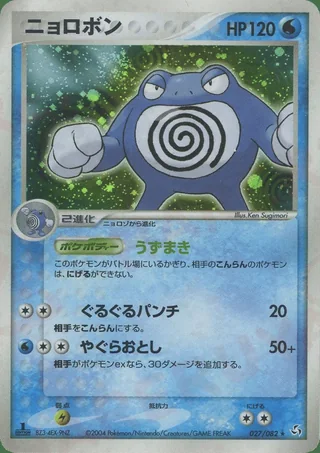
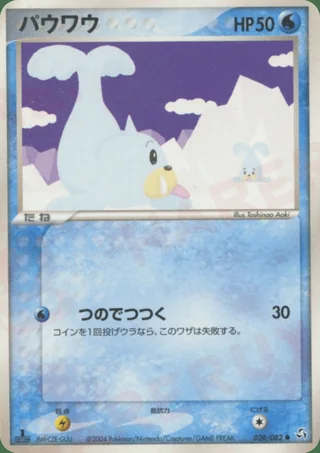
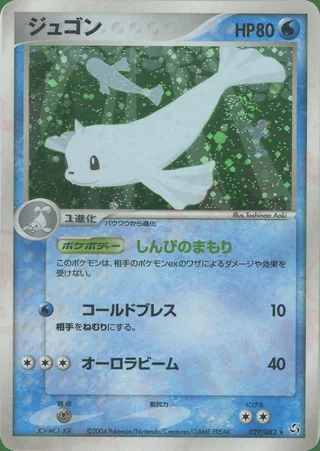
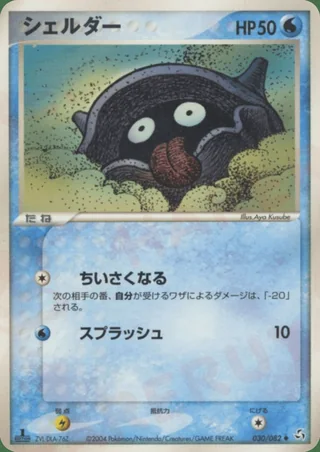
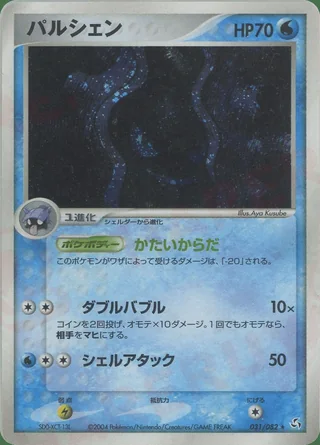
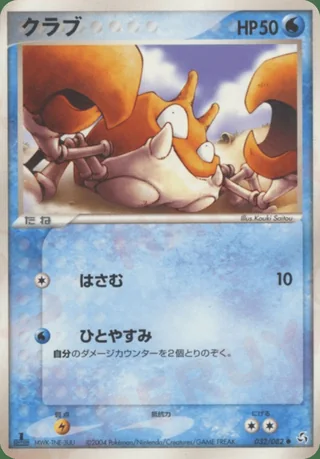
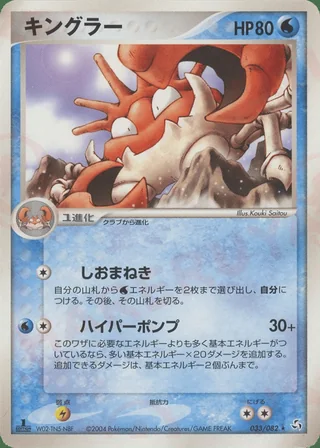
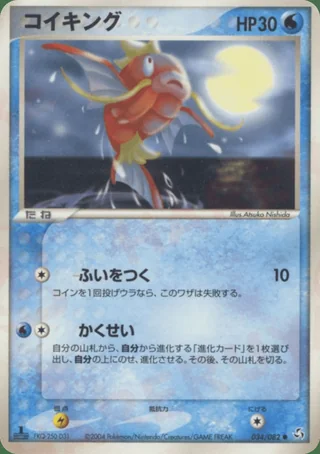
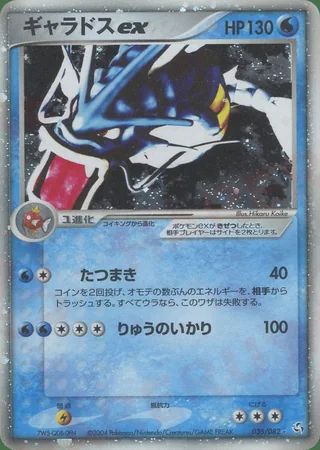
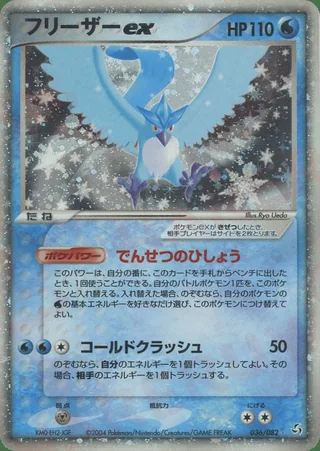
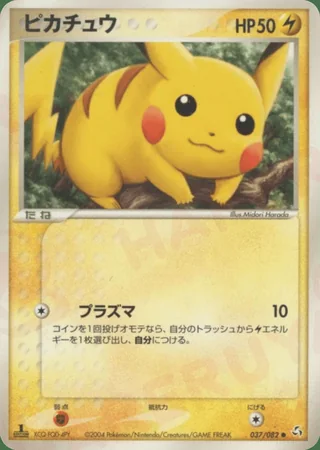
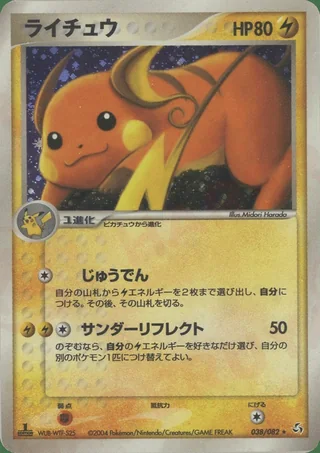
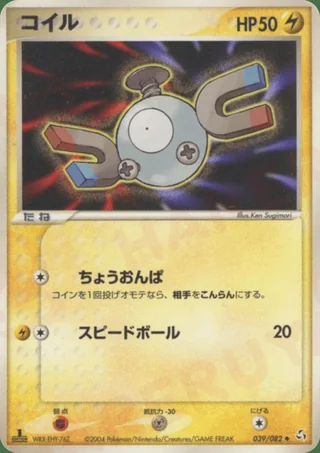
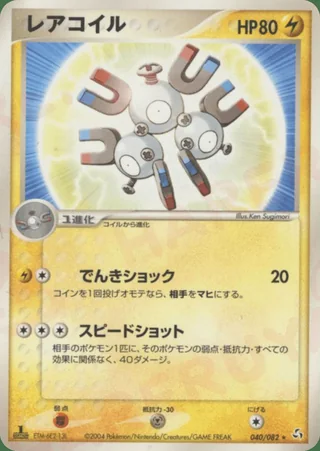
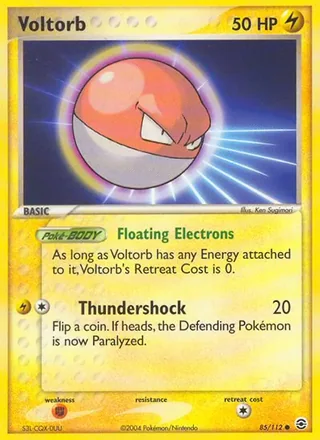
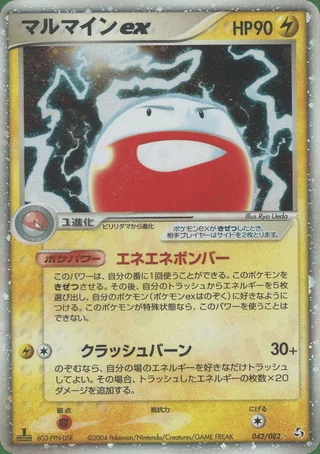
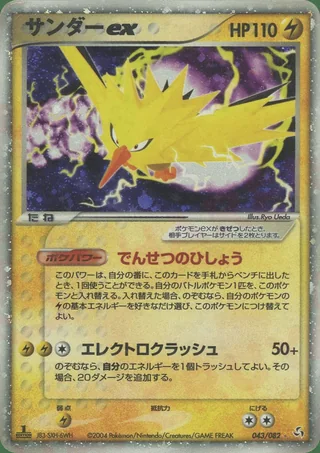
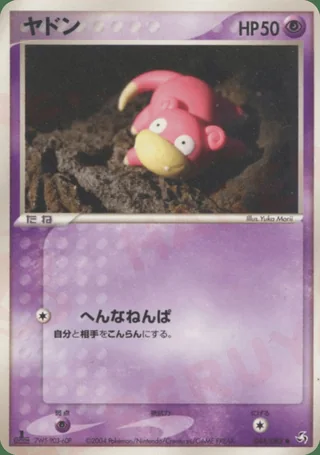
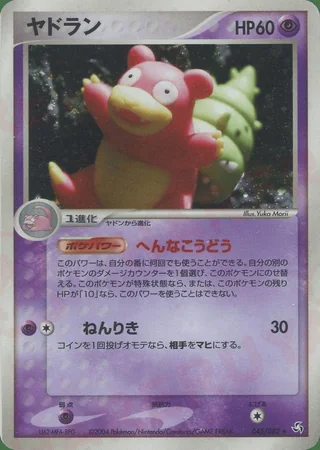
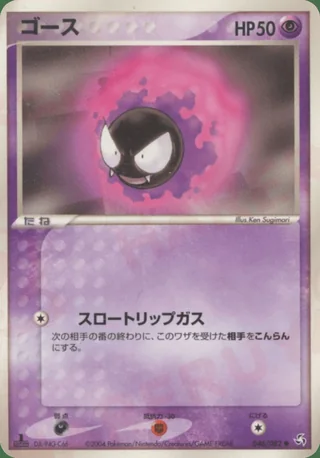
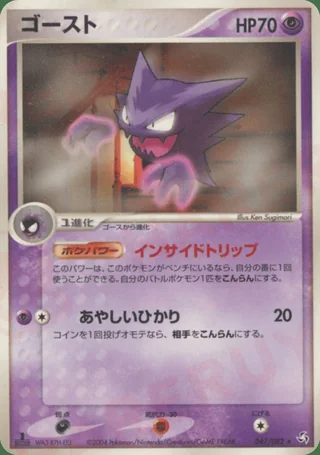
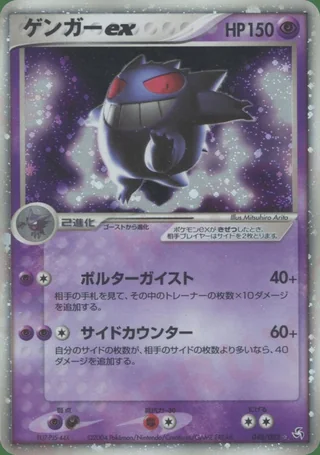
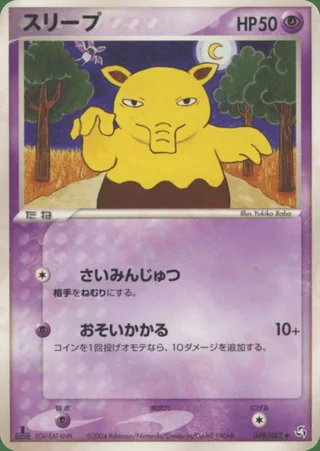
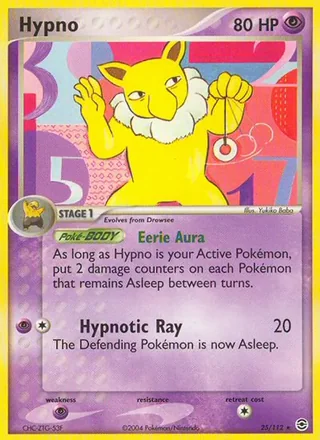
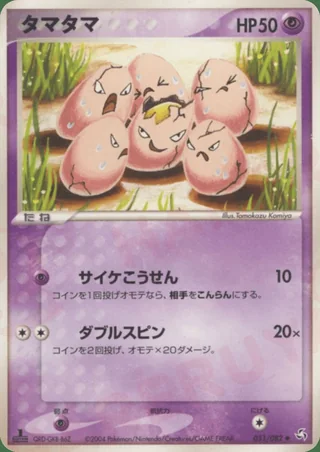
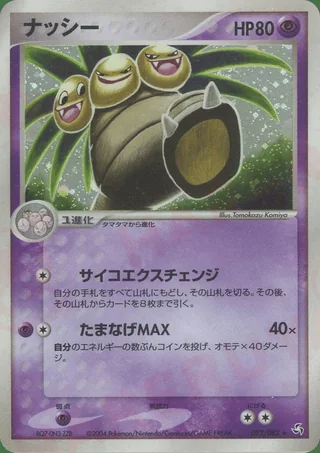
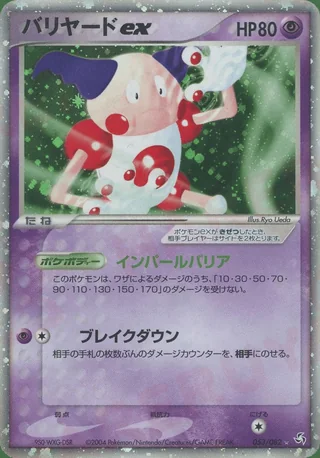
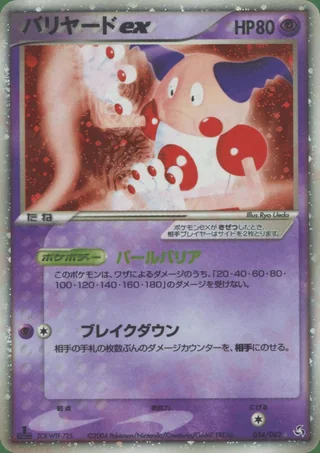
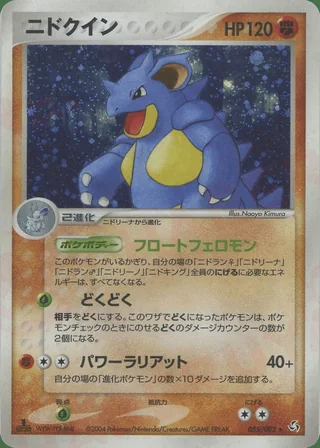
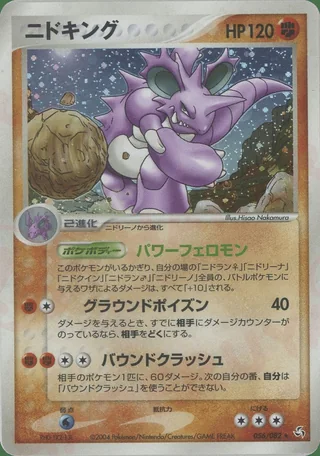
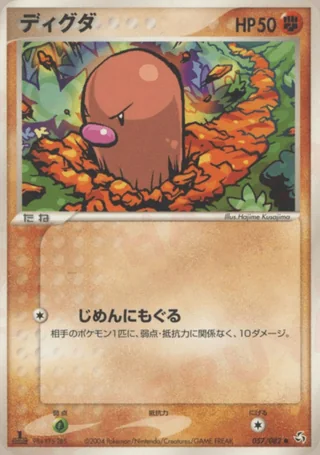
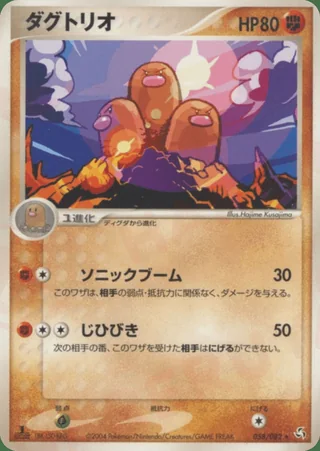
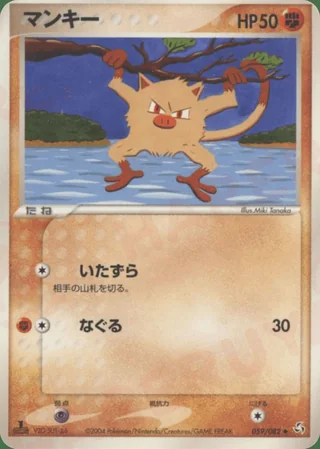
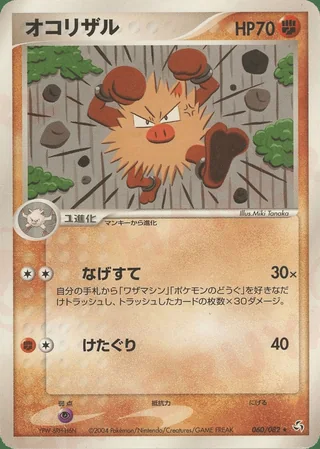
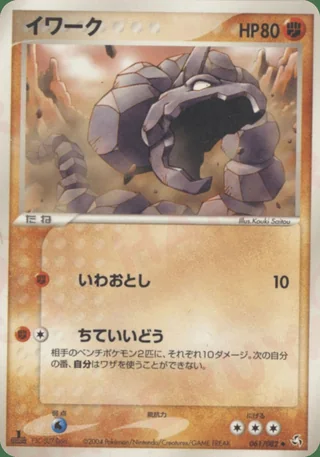
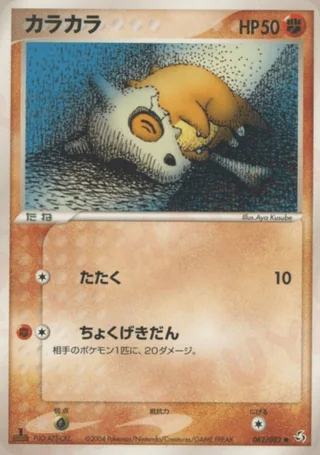
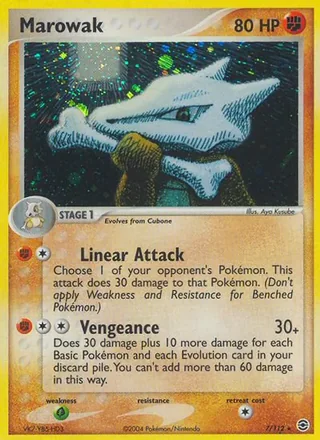
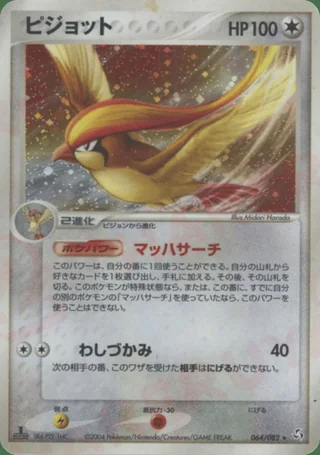
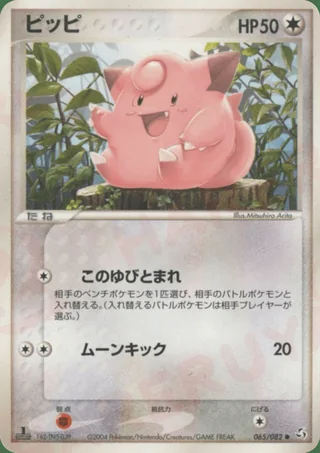
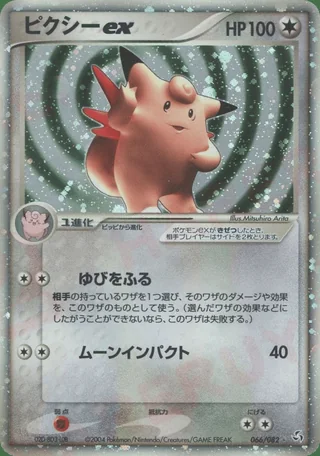
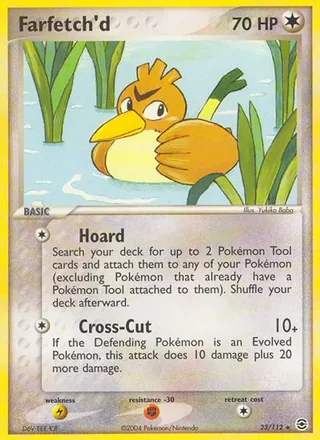
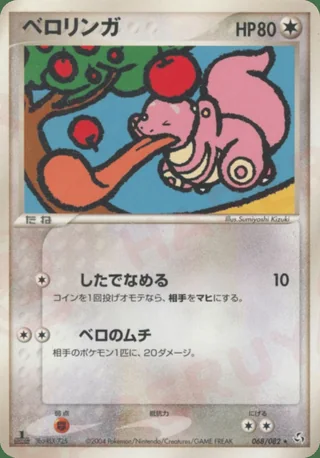
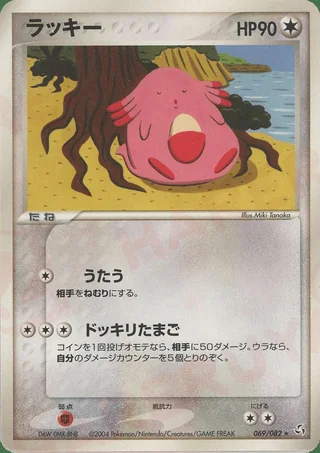
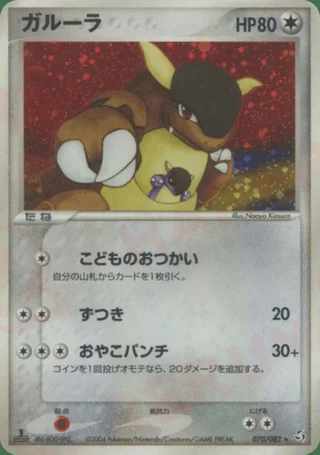
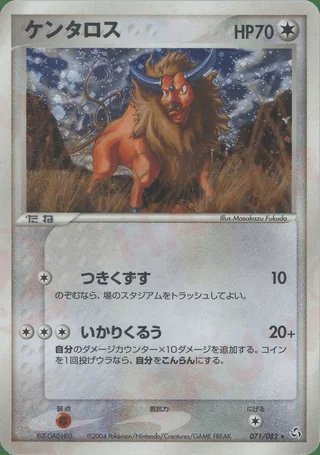
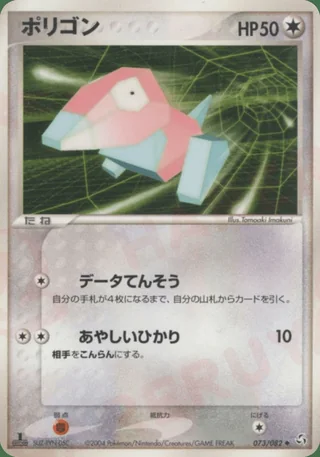
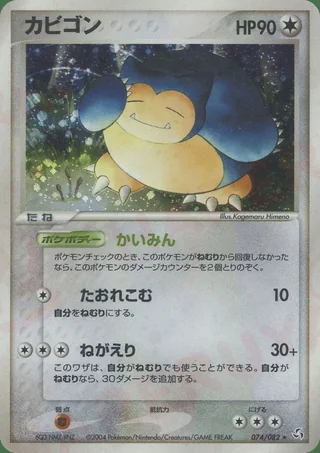
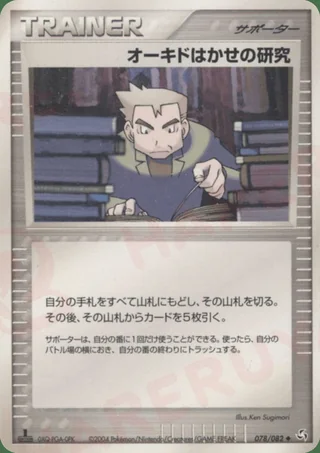
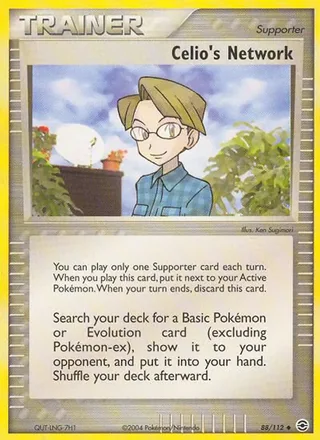
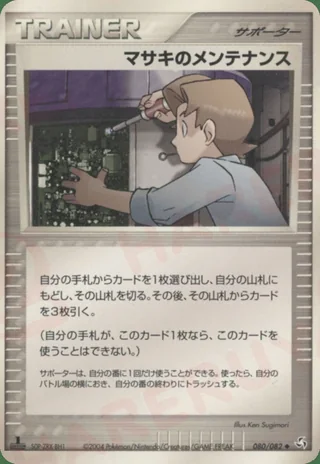
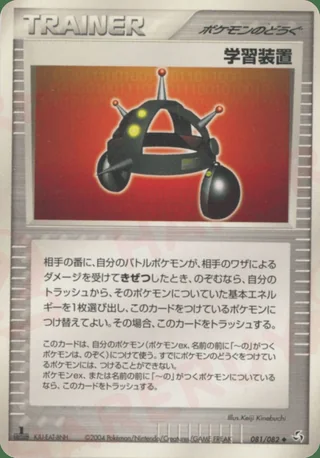
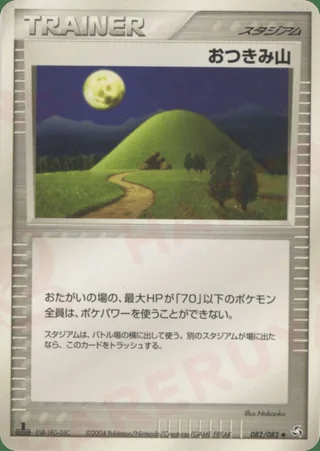
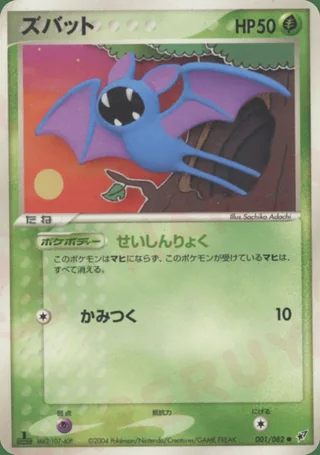
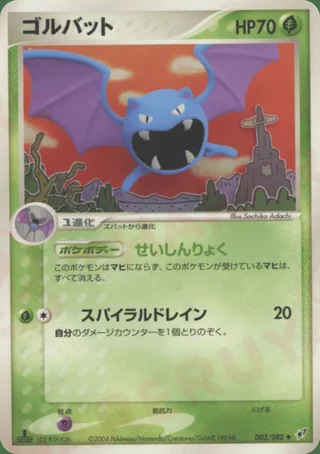
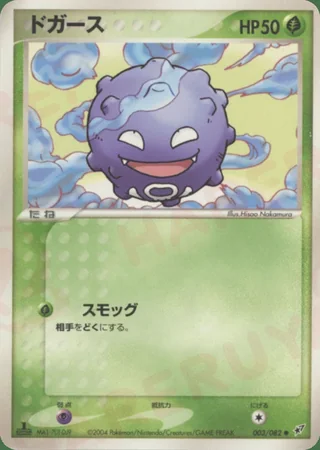
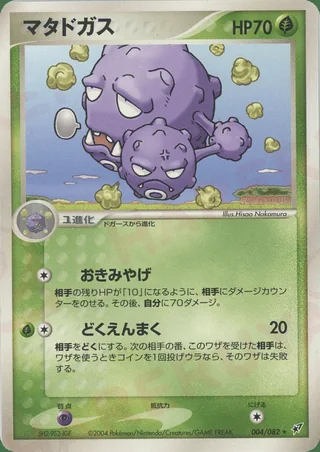
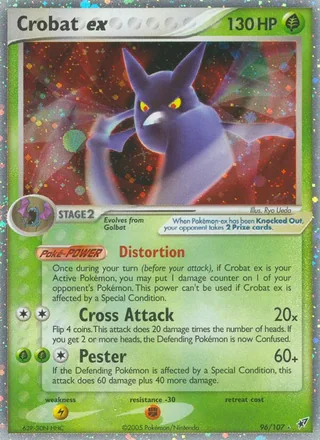
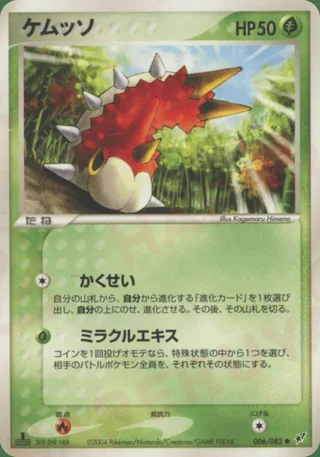
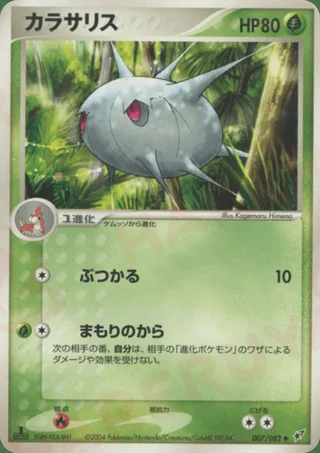
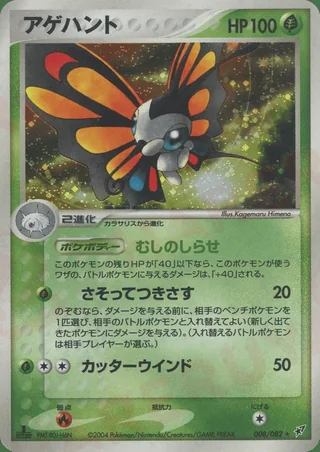
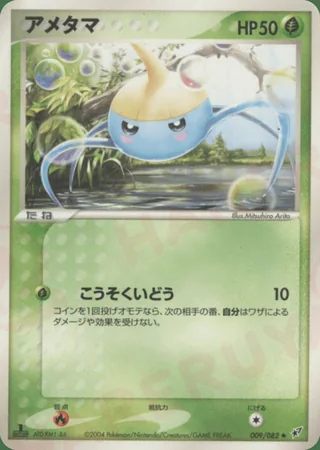
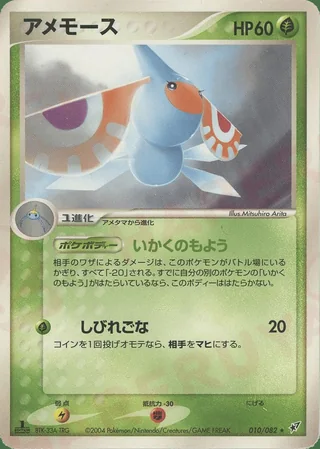
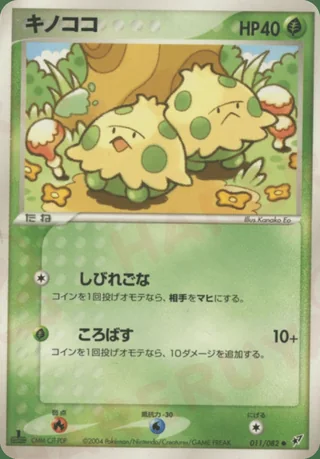
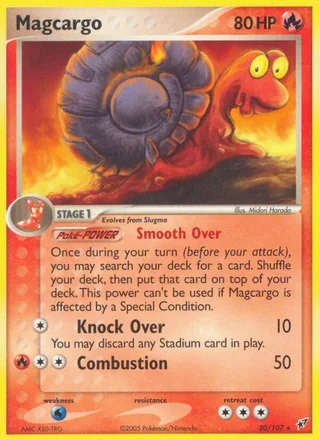
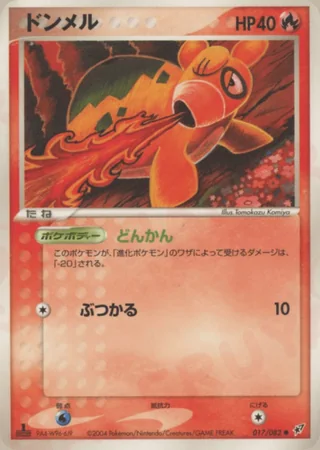
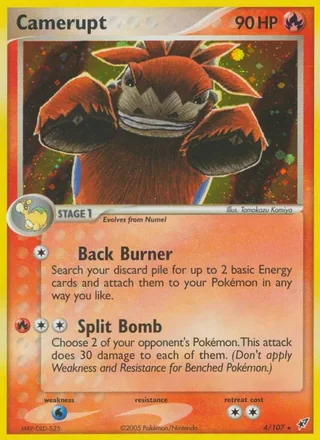
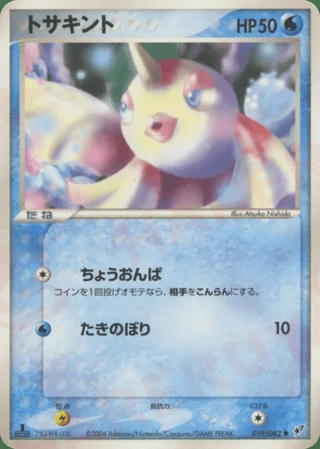
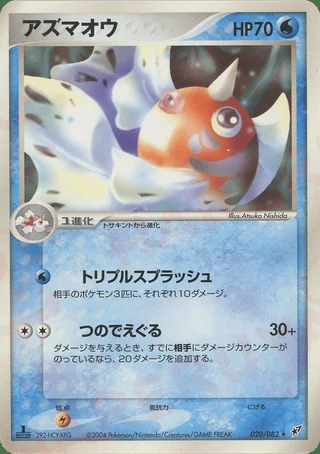
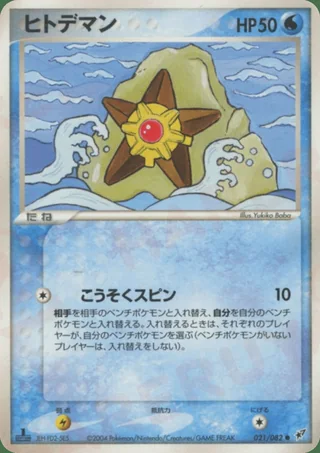
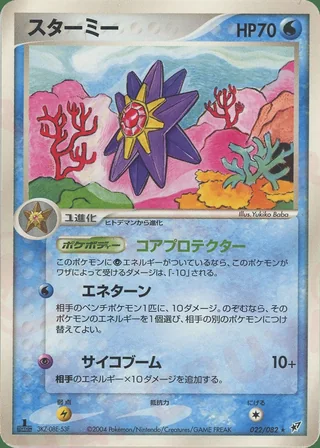
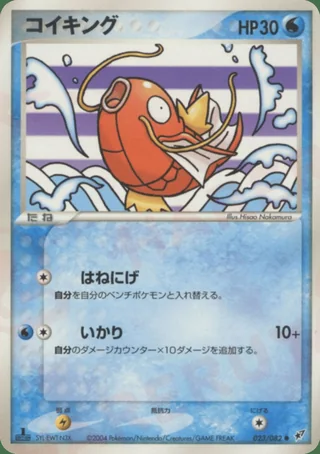
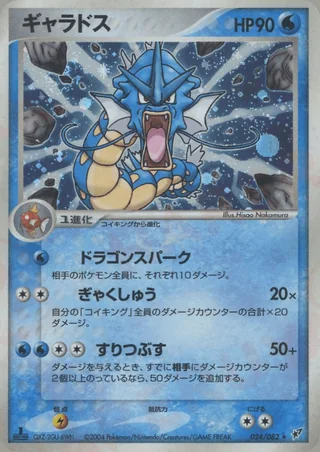
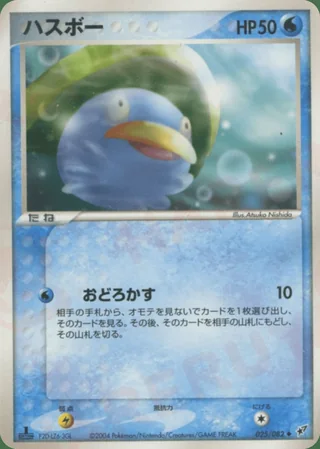
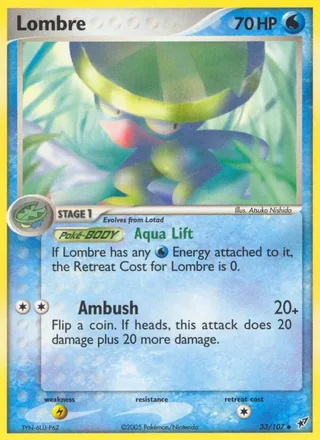
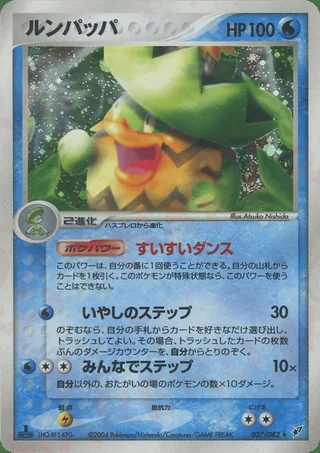
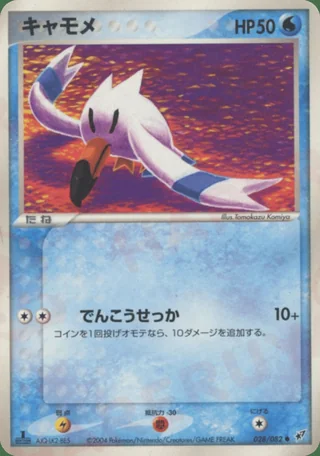
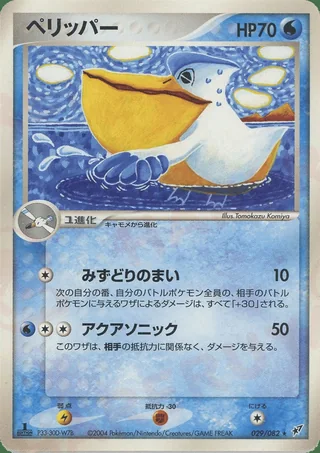
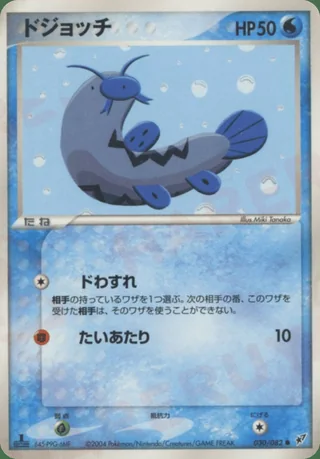
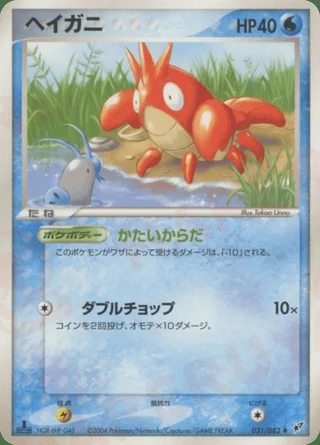
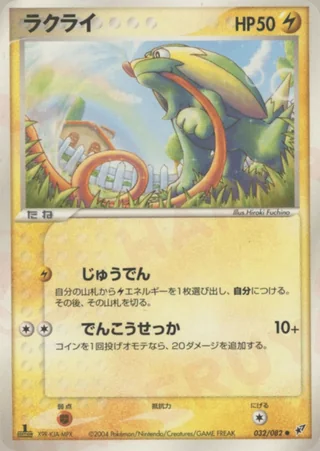
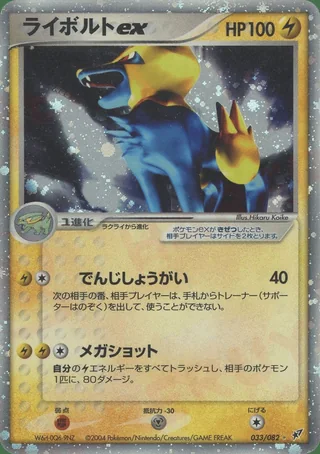
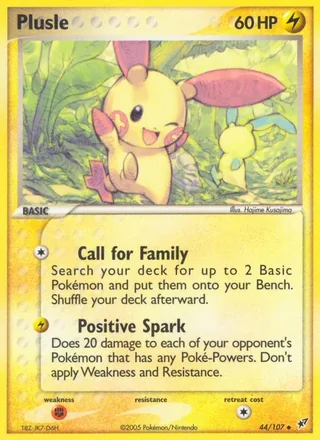
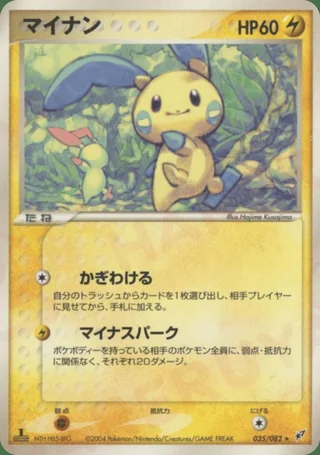
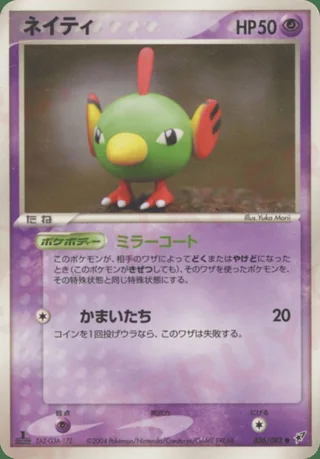
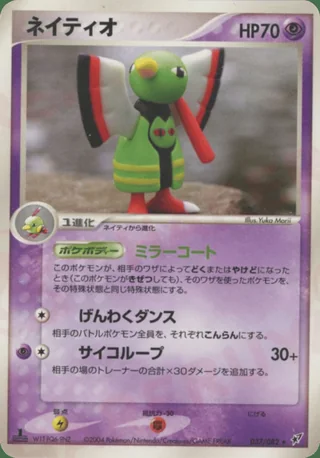
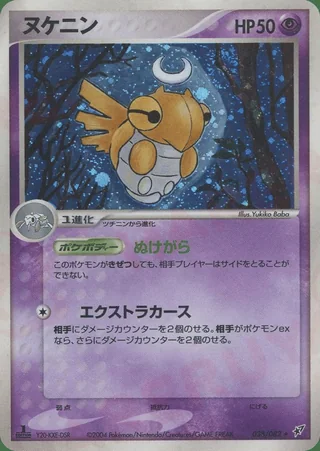
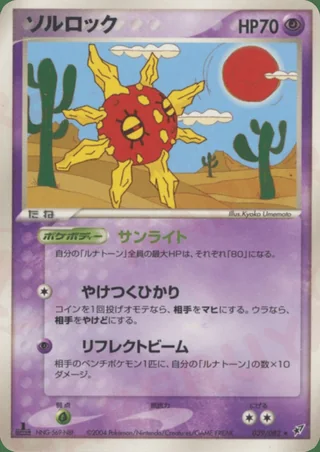
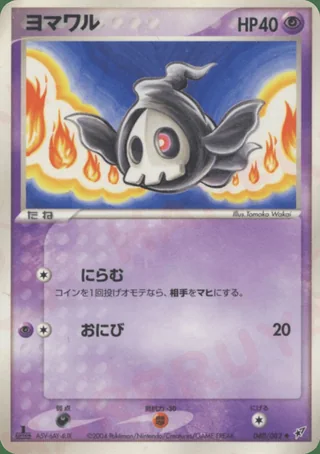
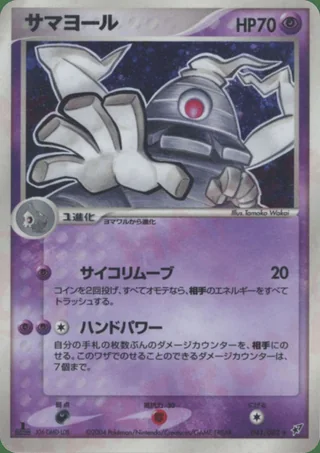
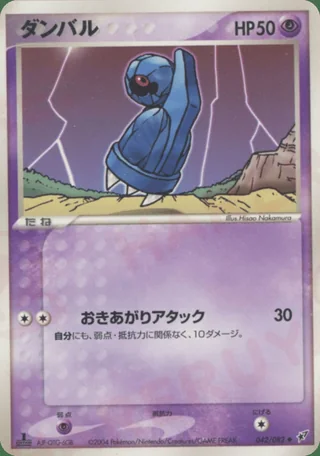
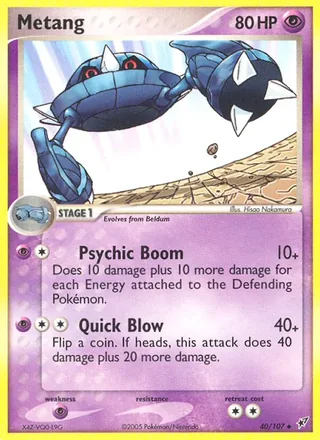
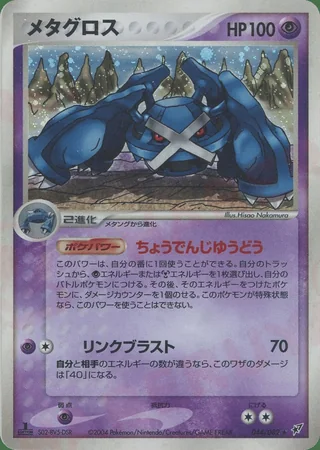
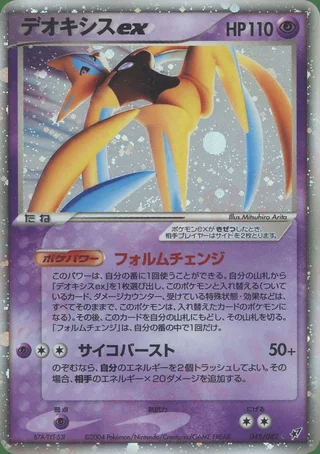
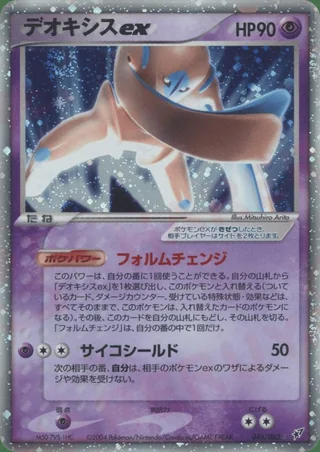
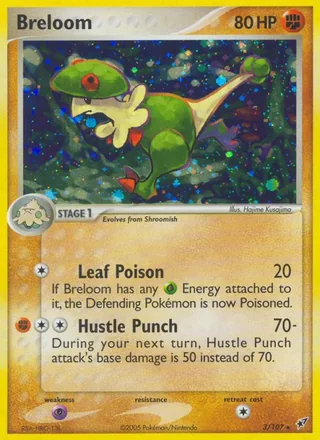
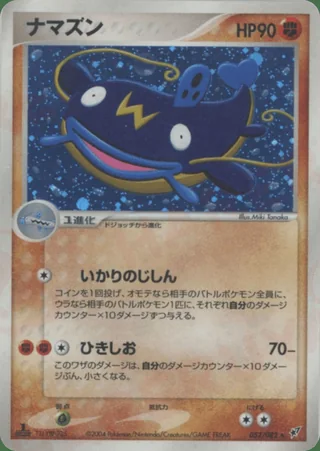
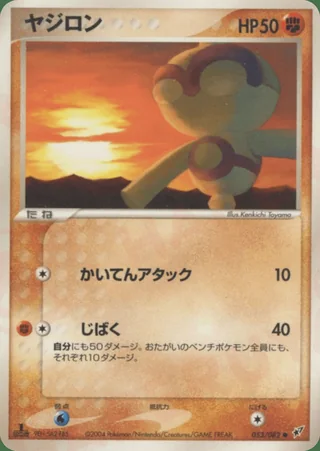
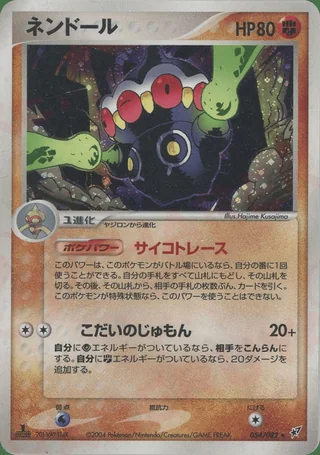
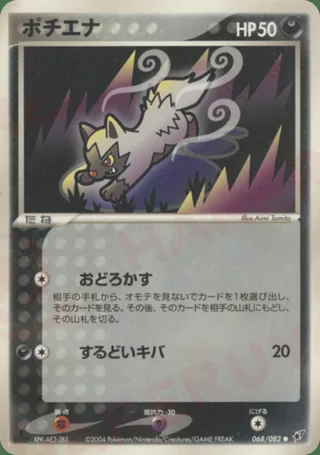
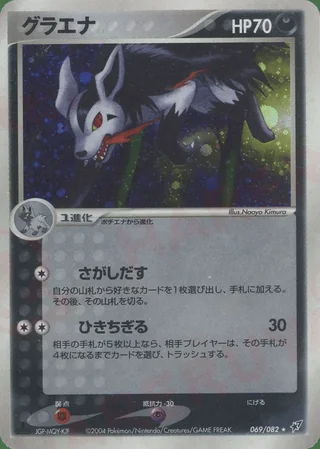
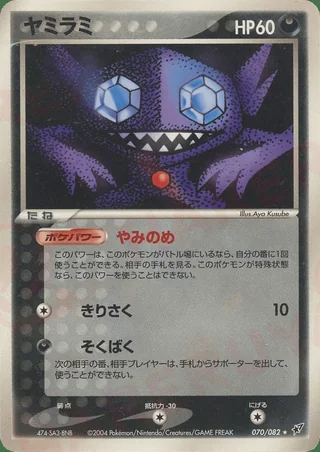
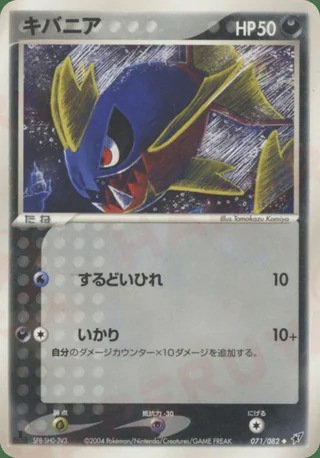
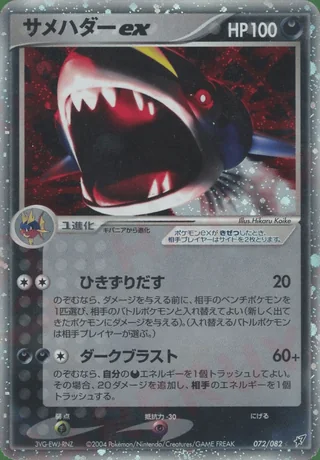
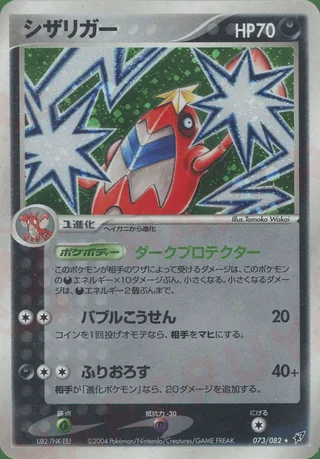
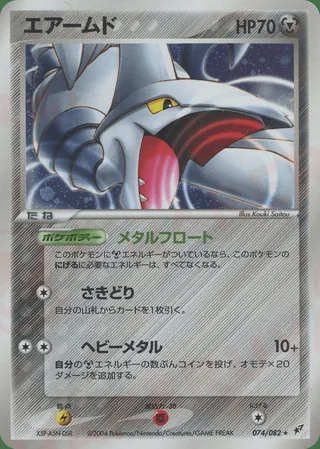
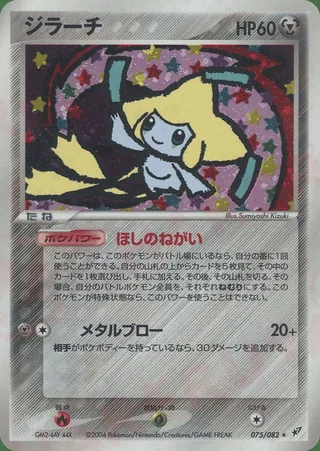
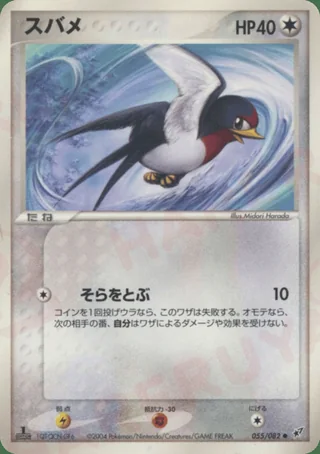
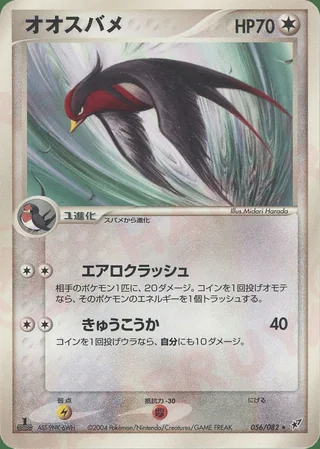
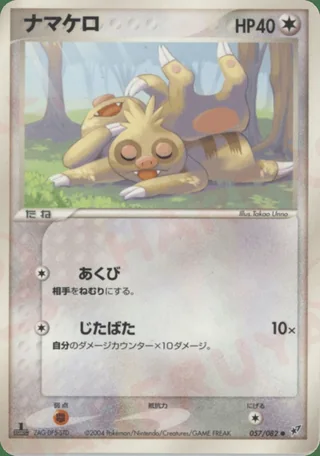
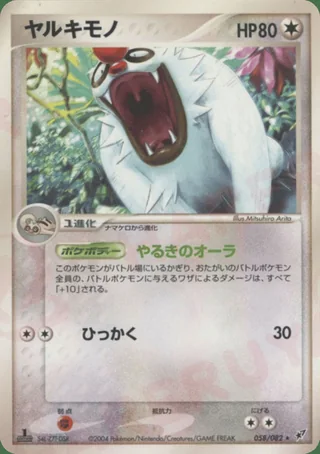
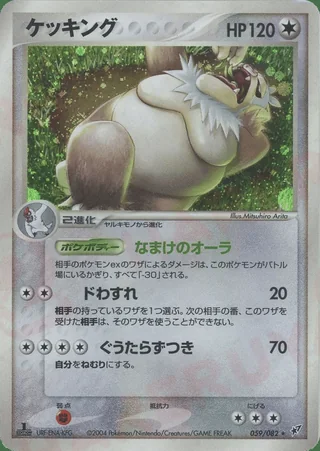
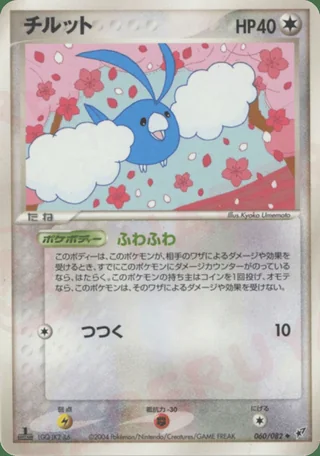
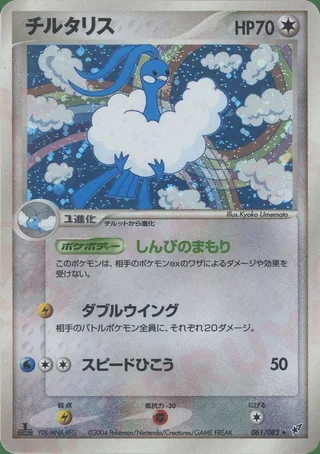
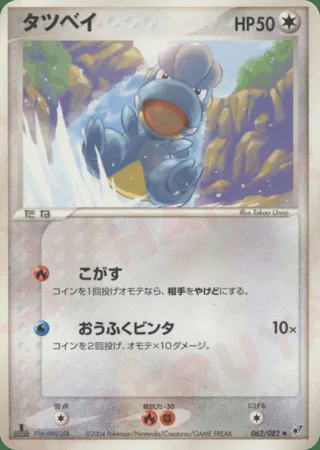
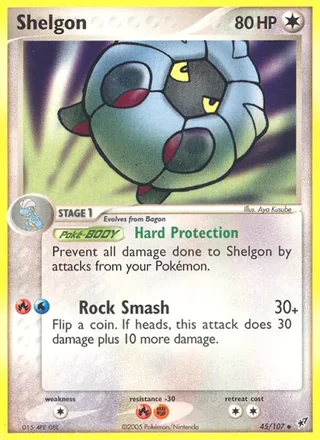
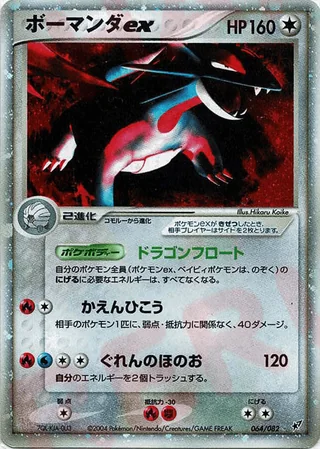
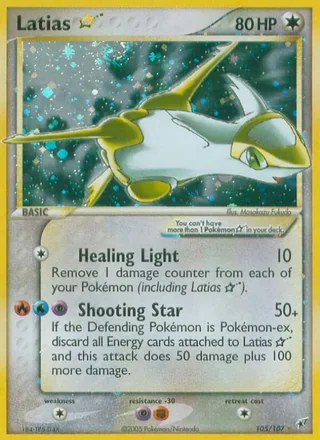
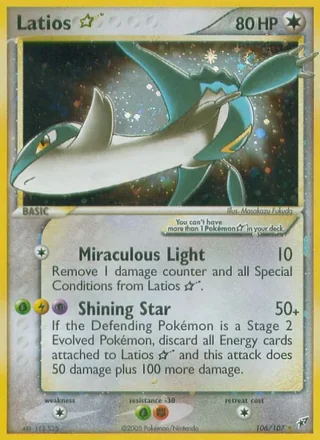
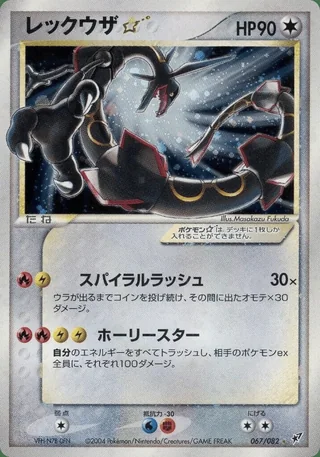
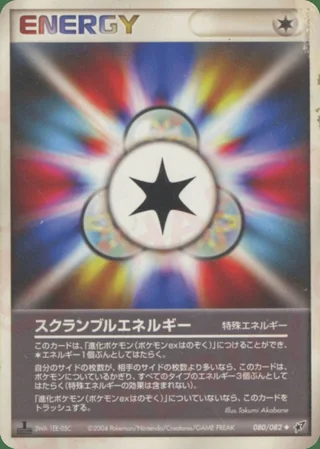
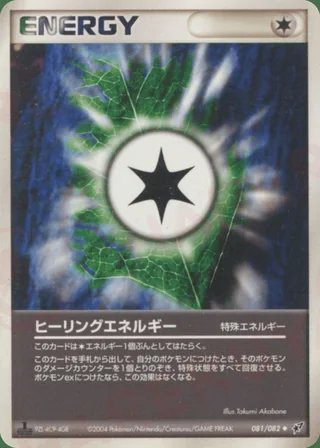
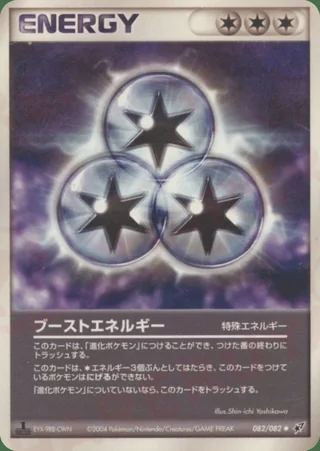
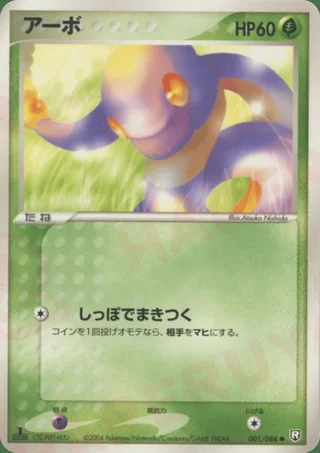
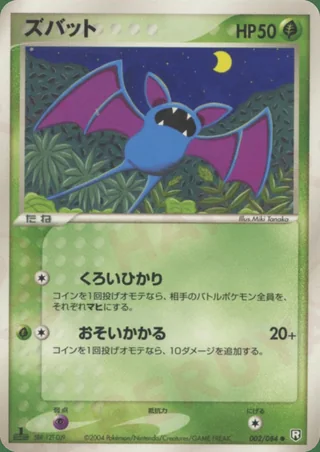
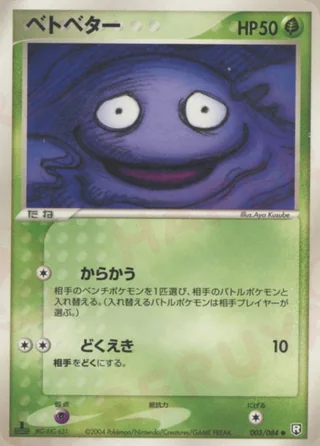
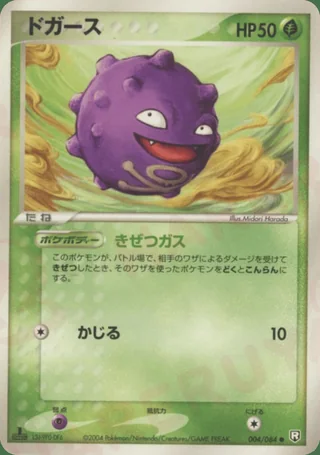
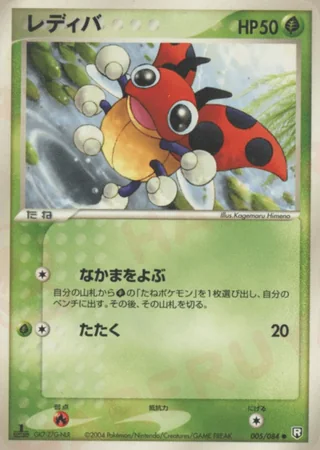
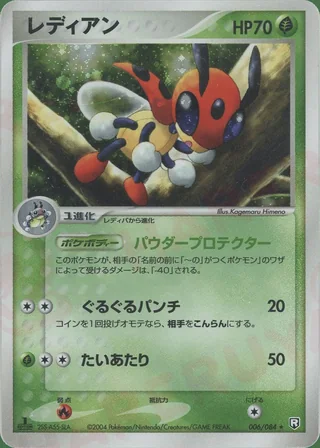
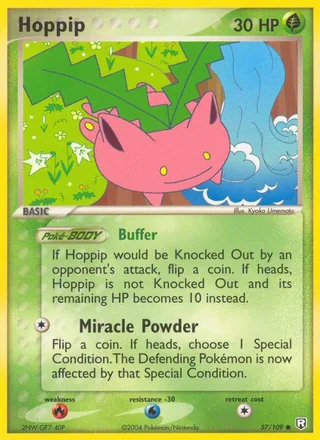
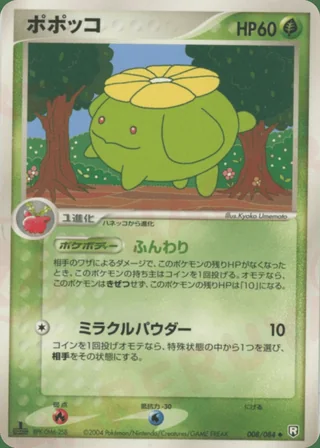
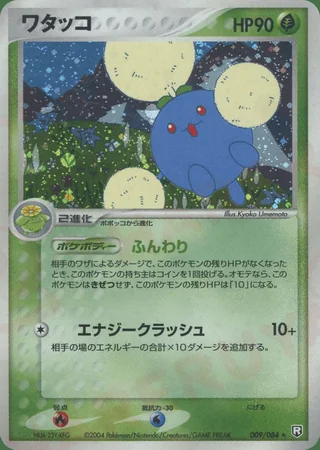
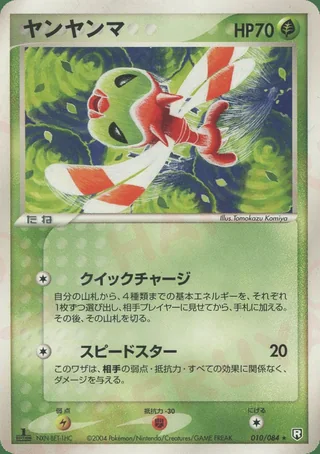
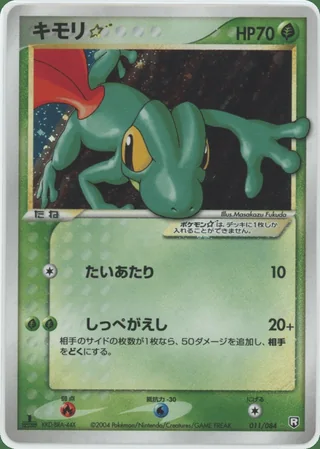
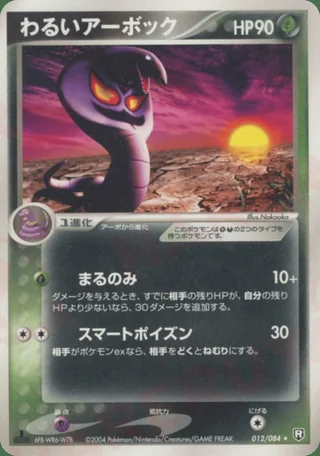
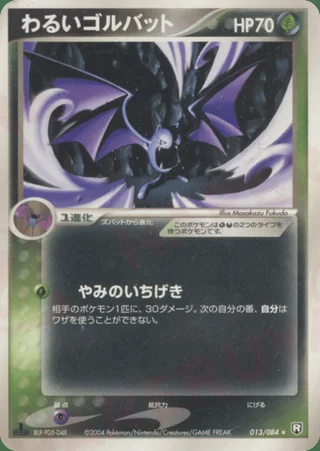
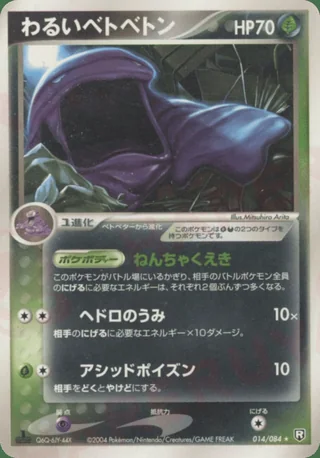
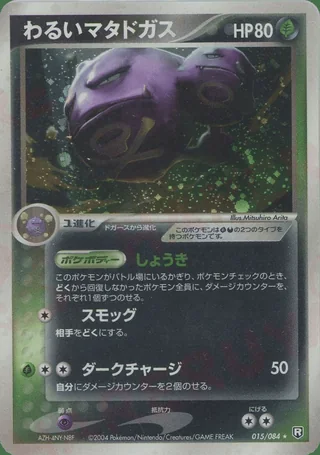
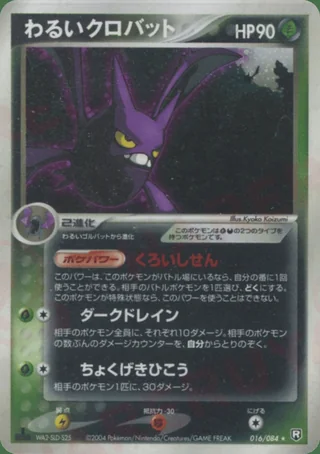
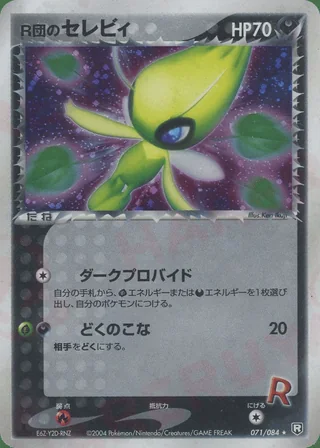
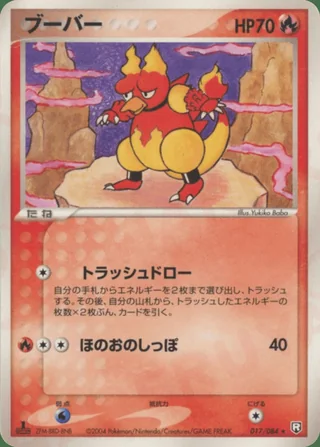
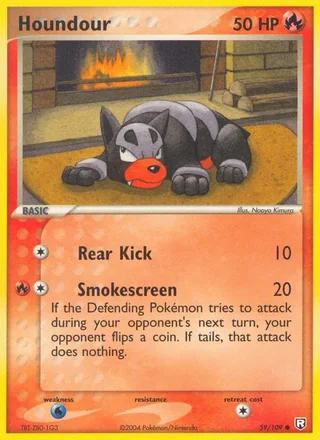
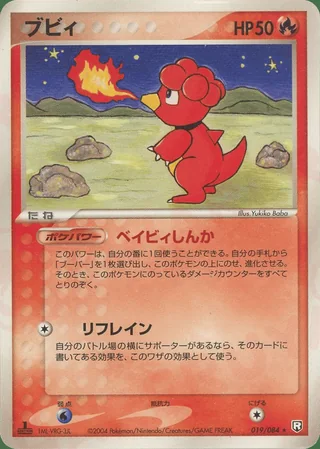
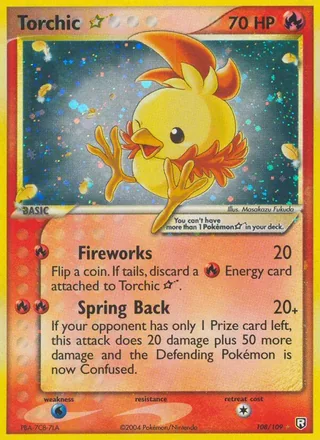
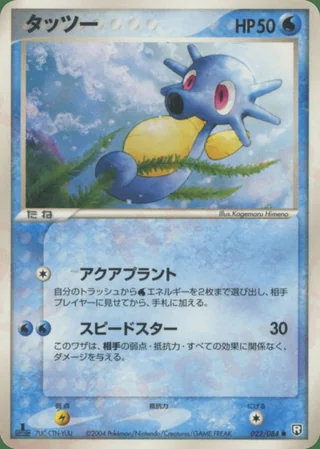
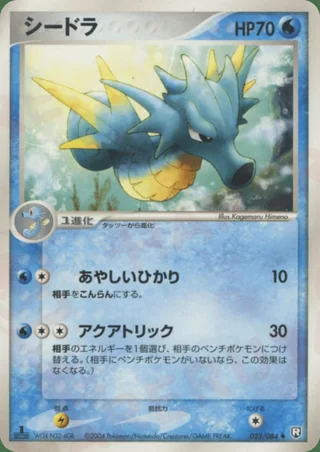
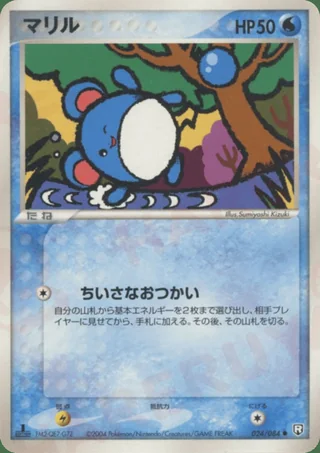
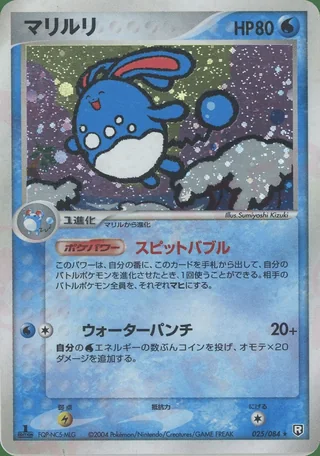
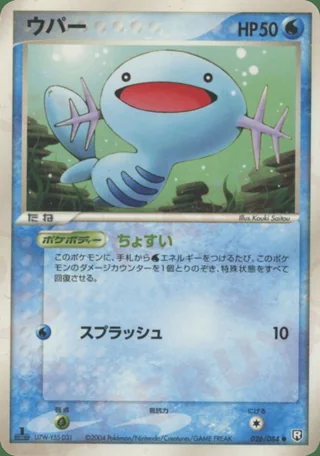
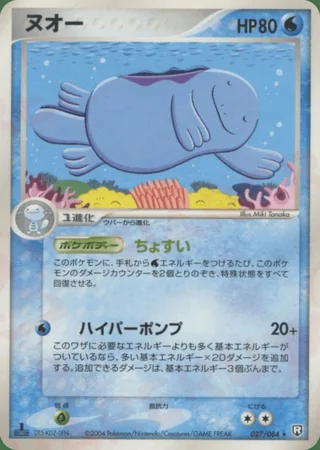
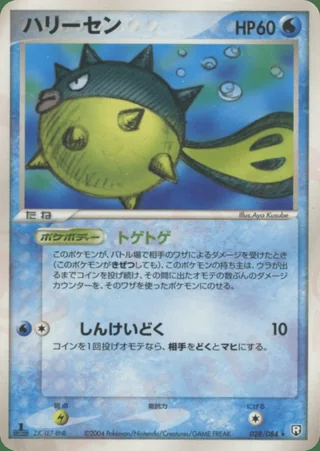
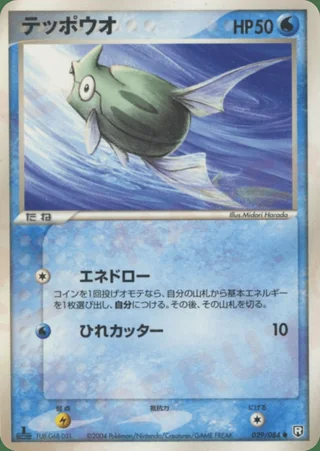
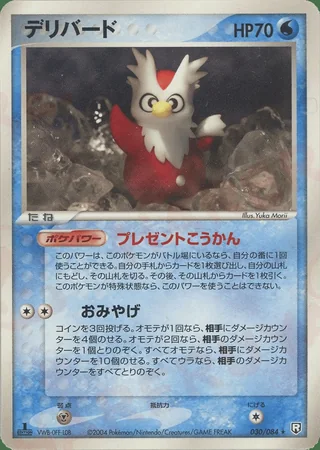
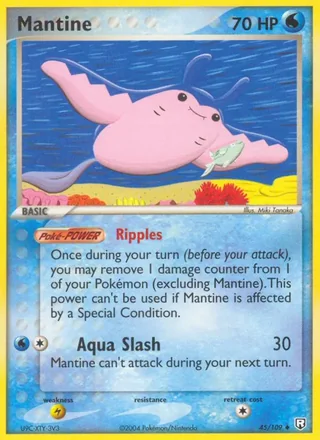
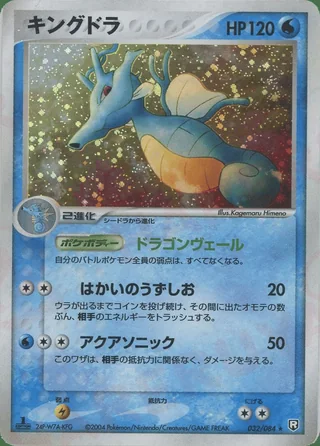
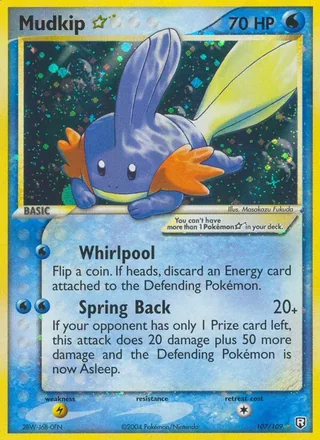
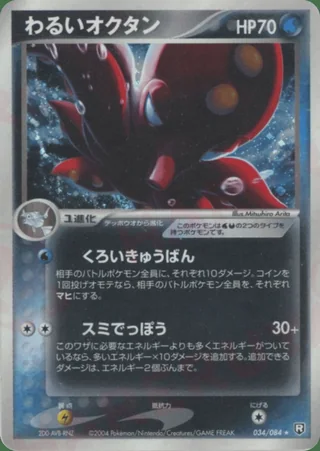
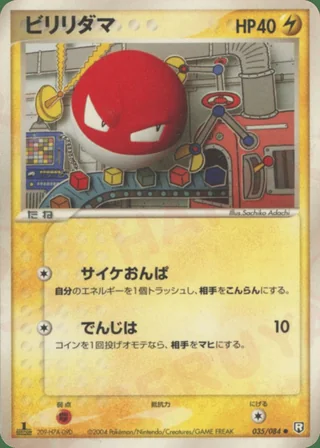
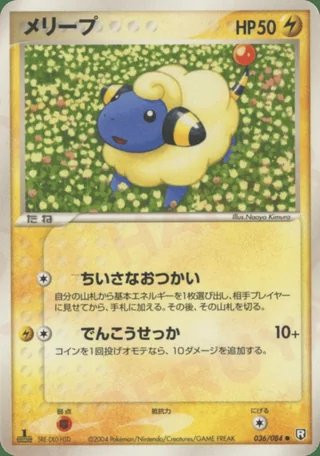
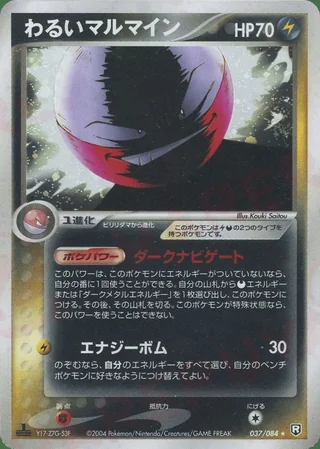
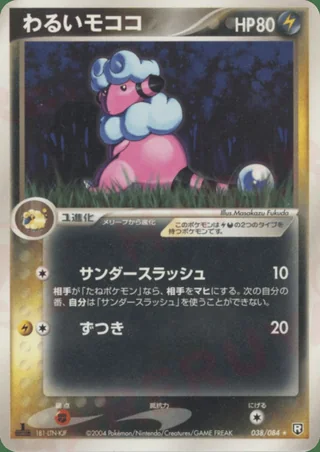
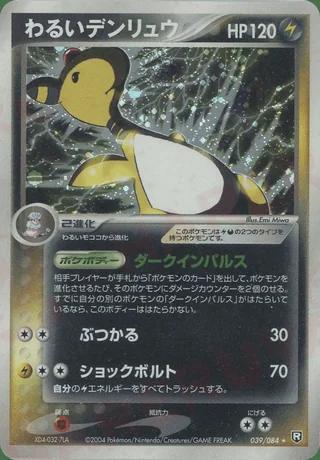
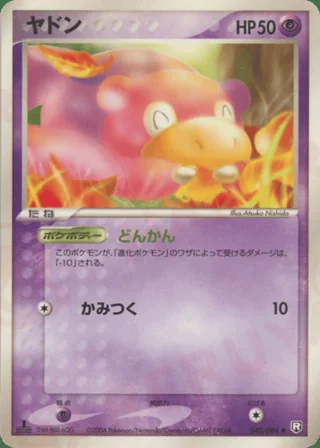
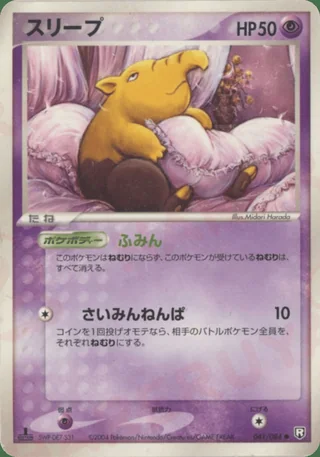
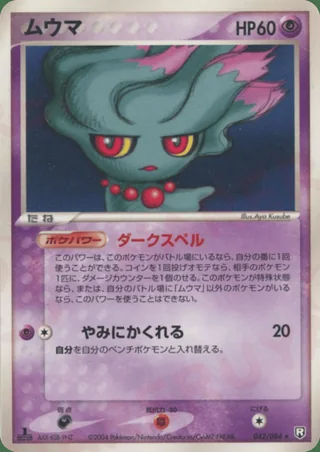
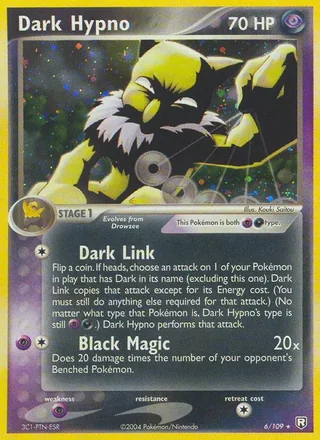
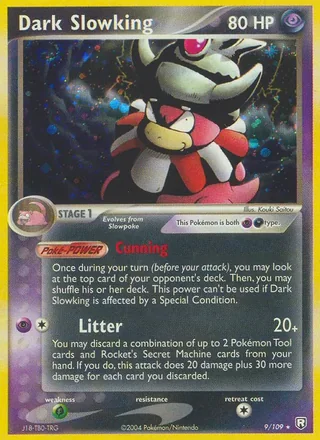
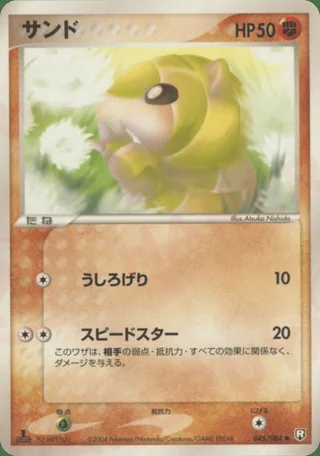
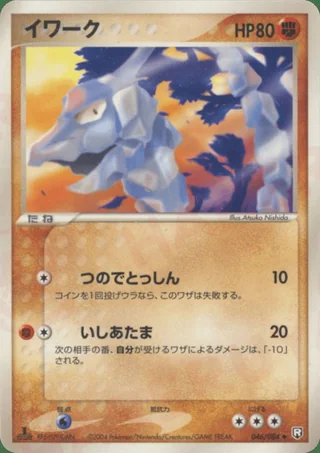
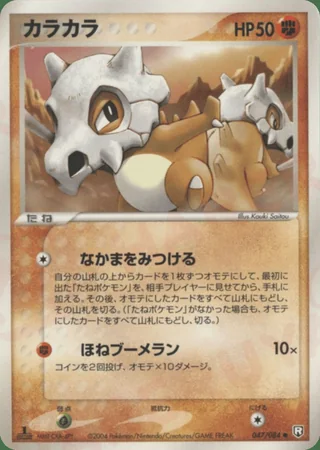
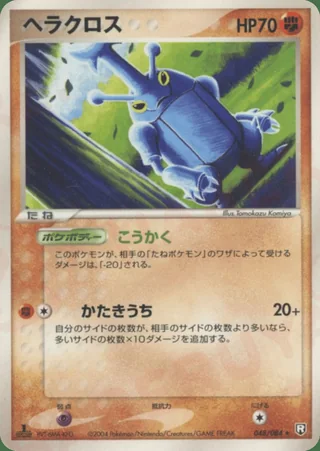
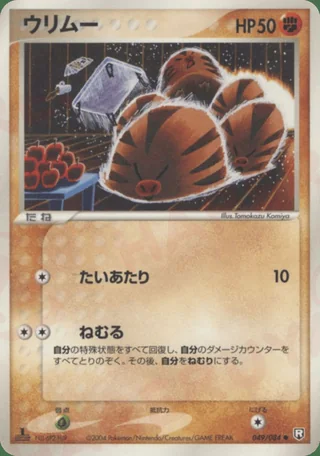
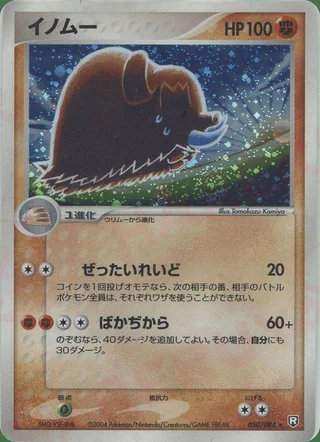
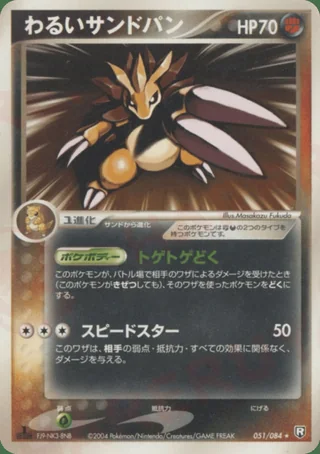
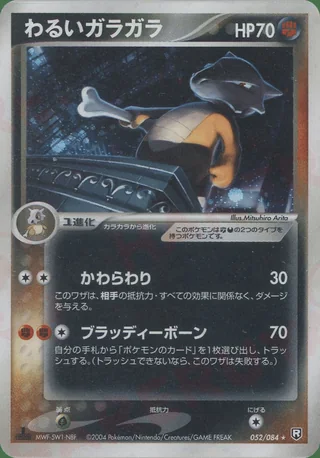
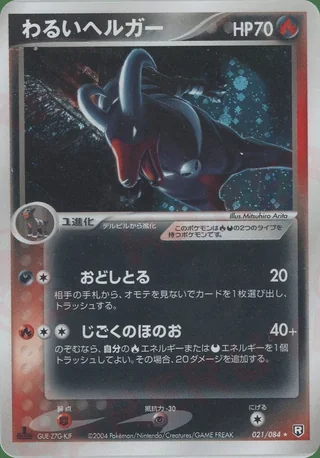
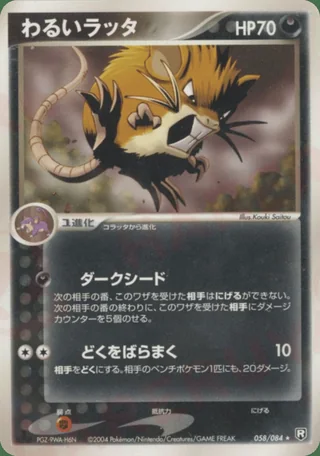
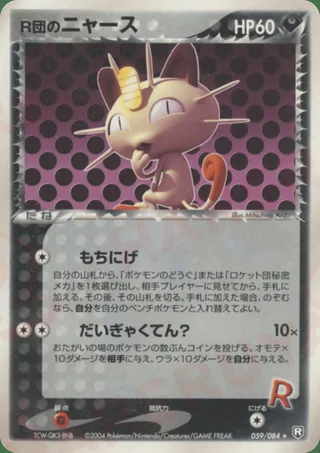
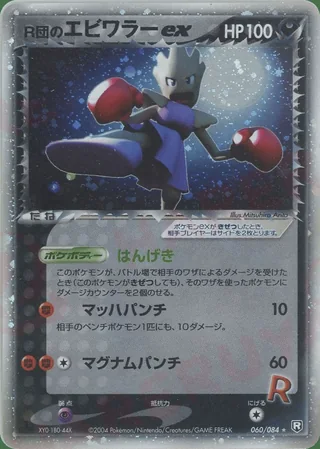
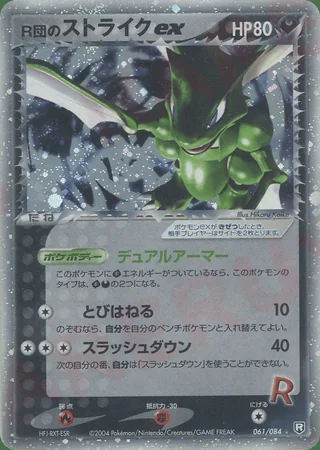
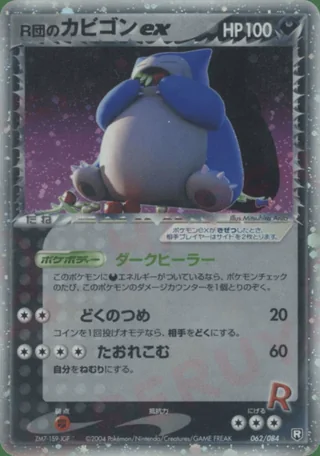
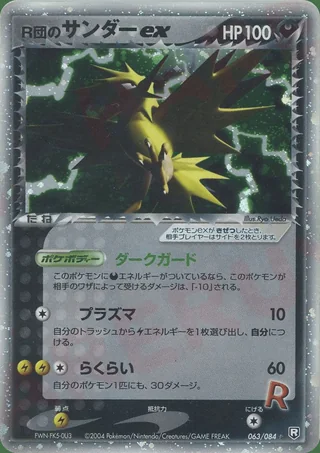
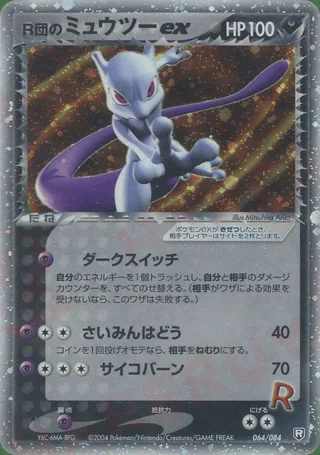
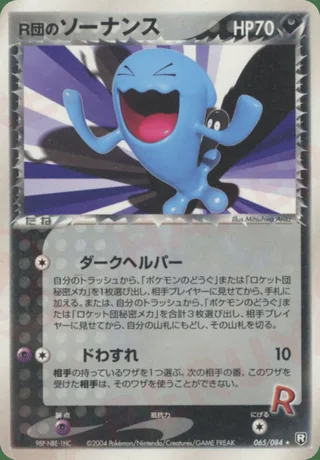
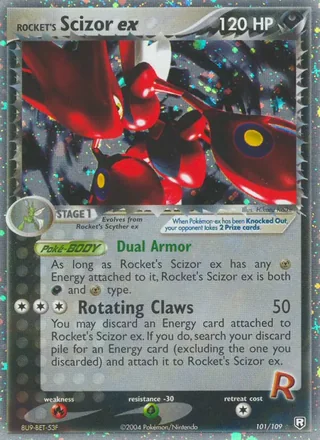
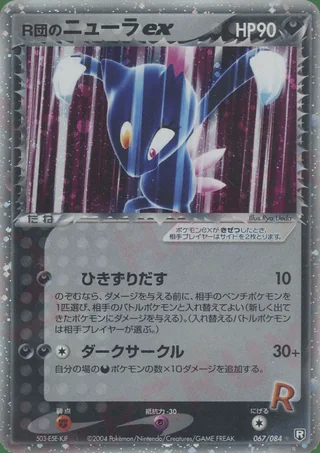
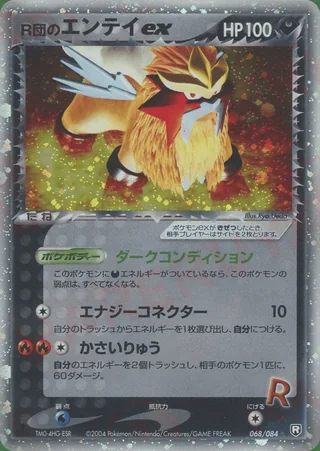
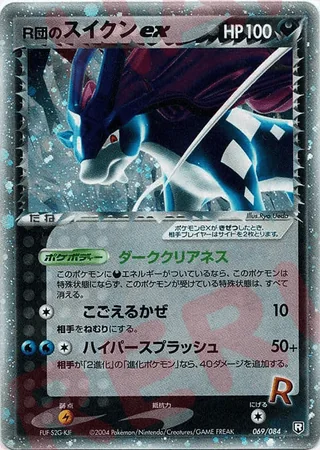
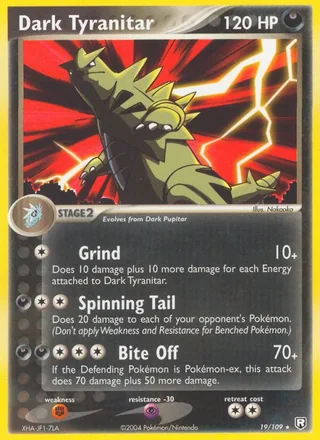
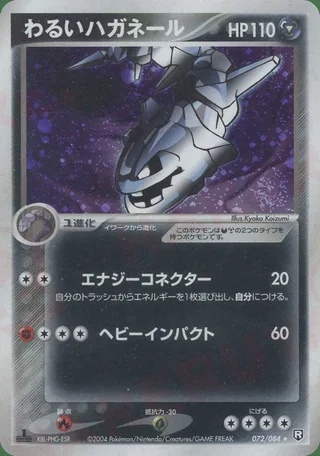
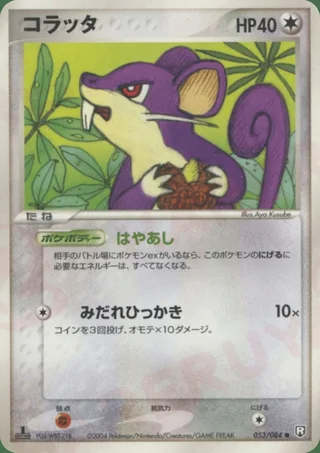
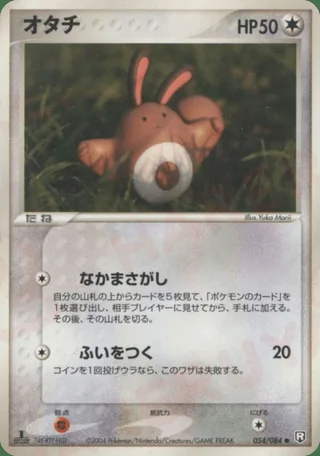
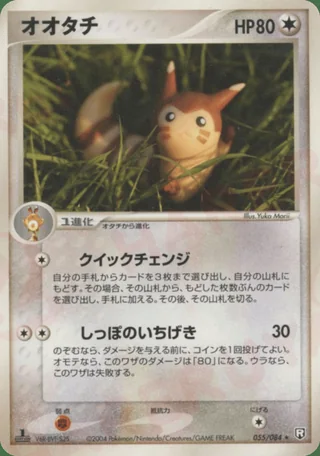
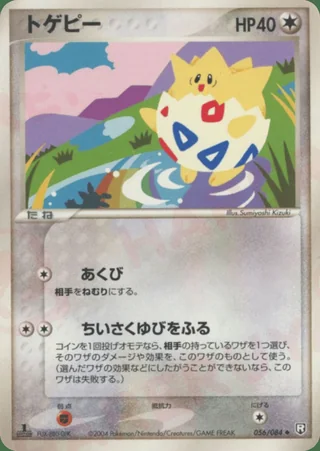
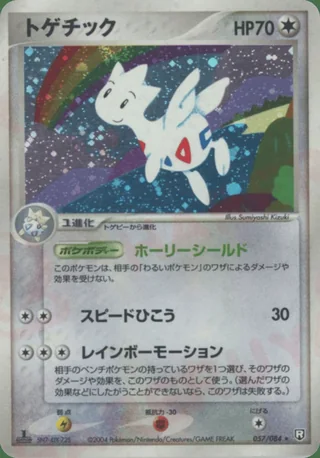
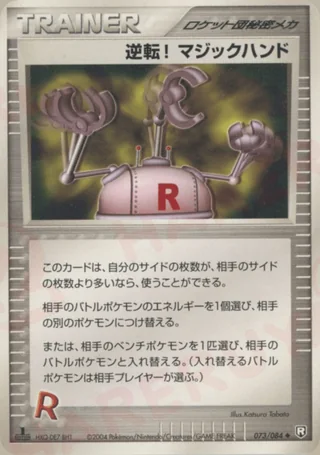
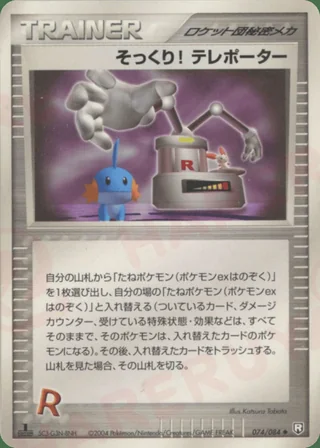
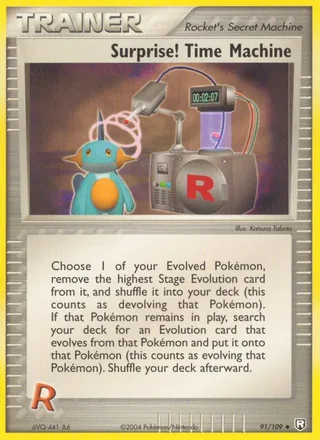
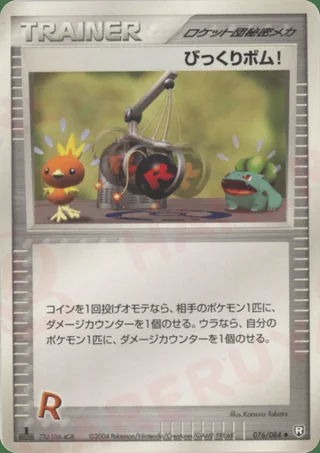
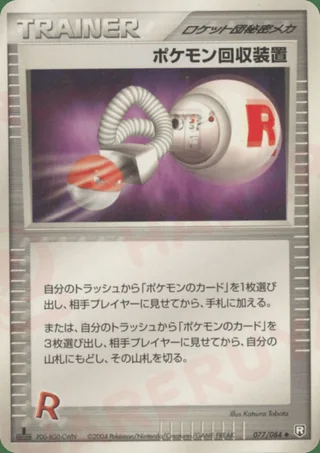
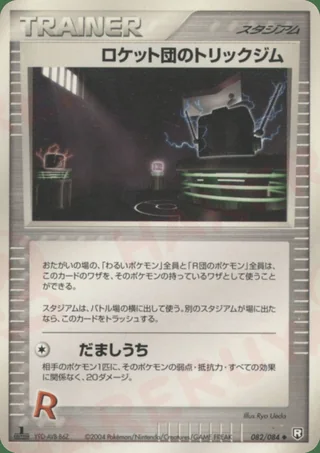
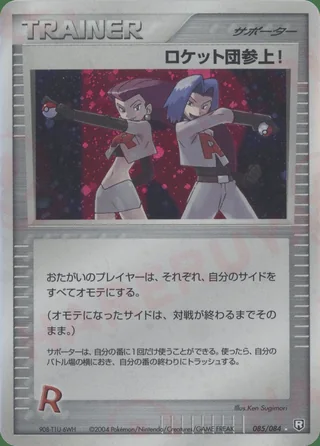
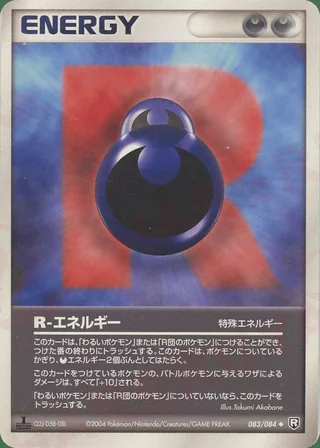
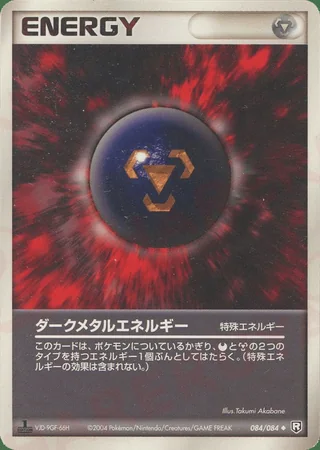
All 332 cards are listed, and none of them is reconstructed from a list of names. Numbers, names and rarities come from the published card lists; the counts match the printed sets exactly — 83 / 82 / 82 / 85.
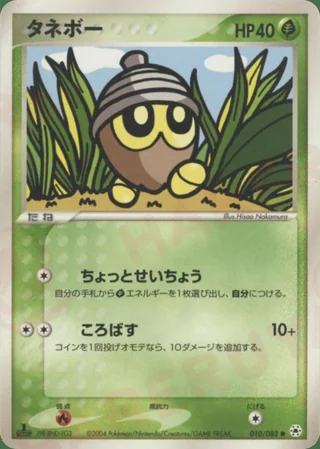
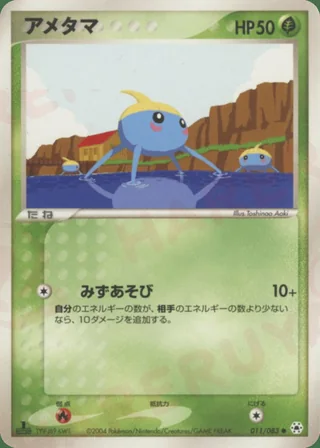
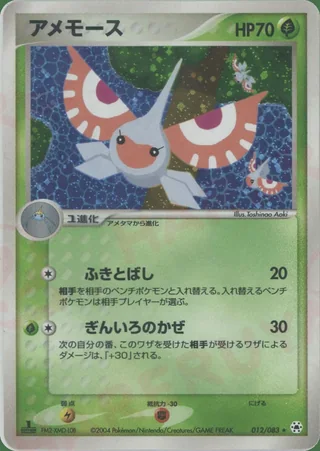
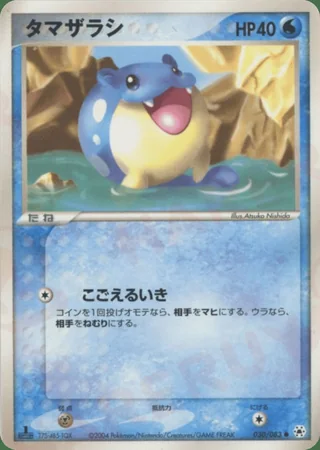
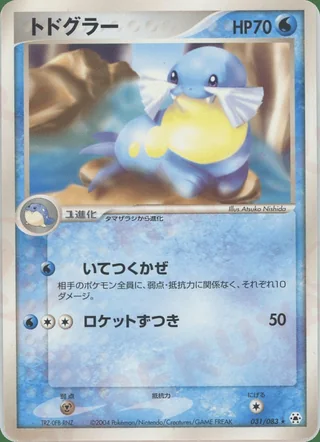
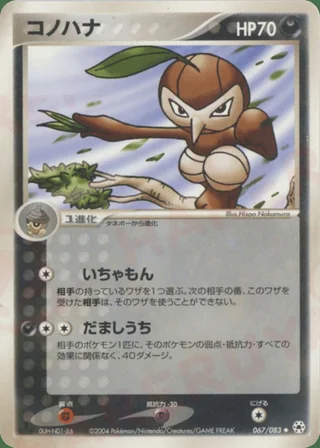
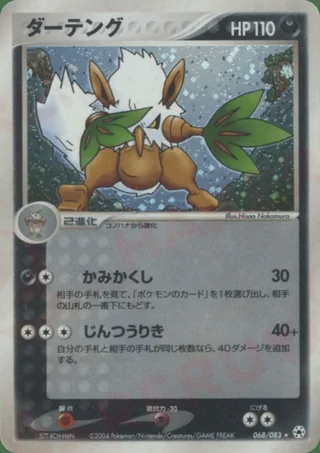
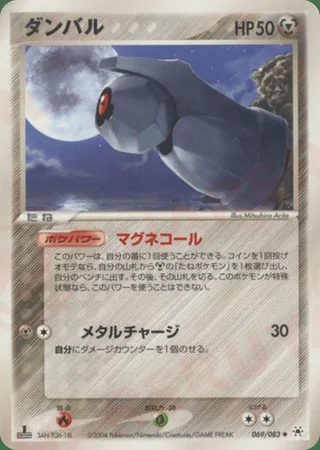
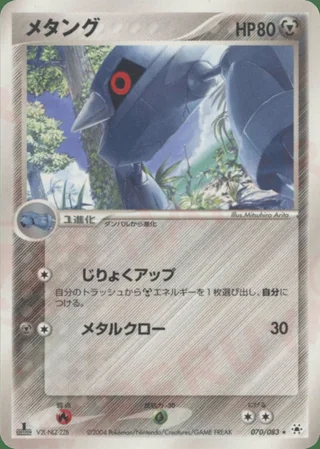
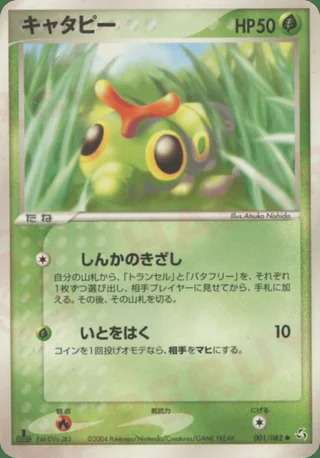
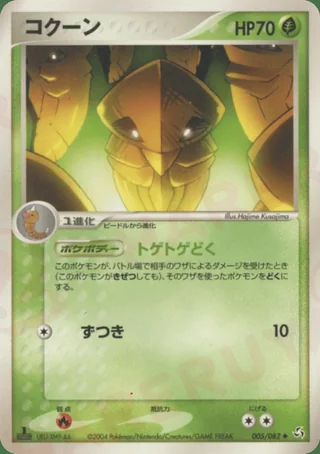
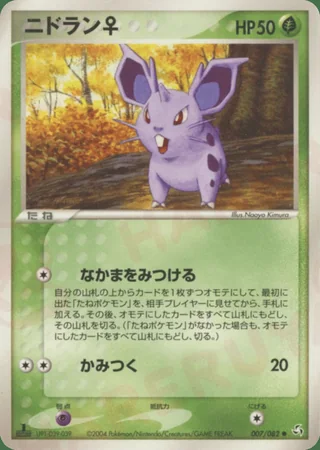
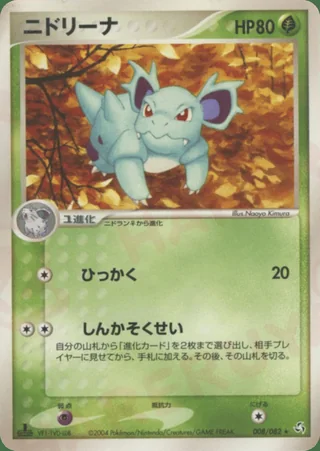
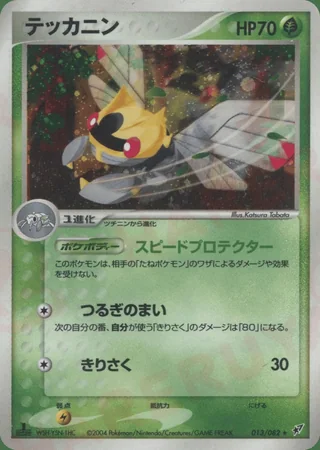
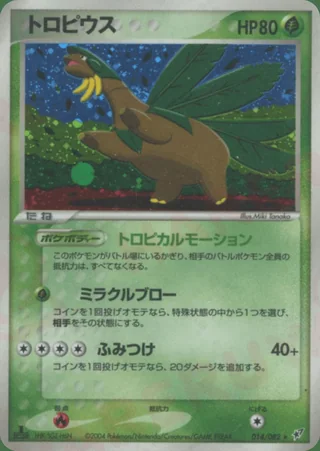
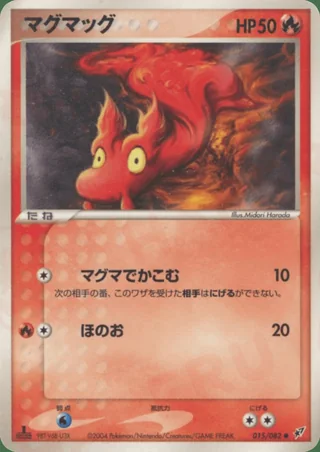
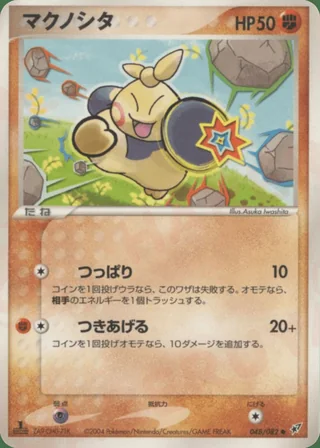
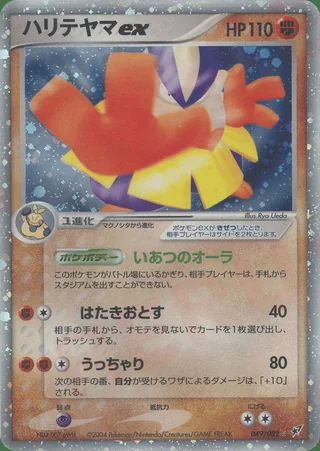
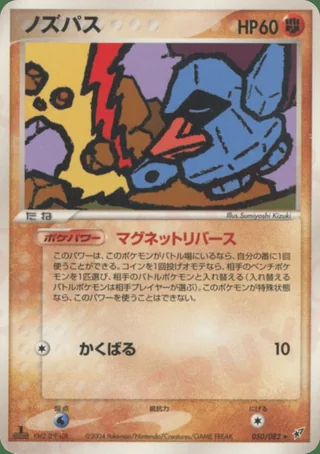
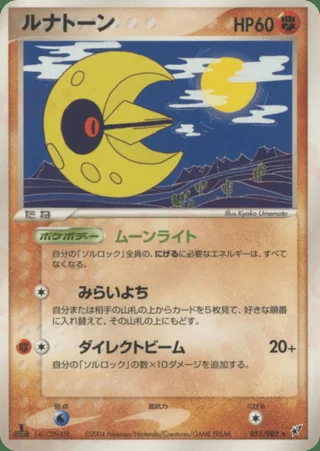
The Japanese card list again had to come from outside the usual database. TCGdex keeps a record for ADV5 but it holds only a card count. For the three PCG sets it does hold single-card records with HP, type and attacks — but the names in those records are machine output, not the printed Japanese: card 005 of Flight of Legends is recorded as カクナ, which is Kakuna's romanisation turned back into kana, and the card itself says コクーン. A database whose names cannot be trusted cannot be used for names, so the lists here come from a card database that holds the Japanese printings and their scans, and the English names on this page are the names printed on the Japanese card.
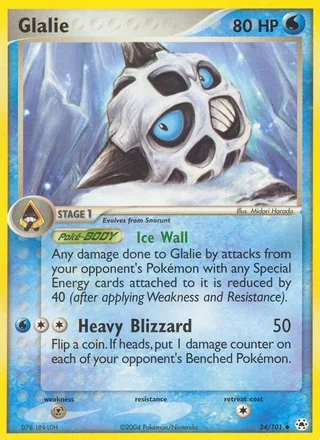
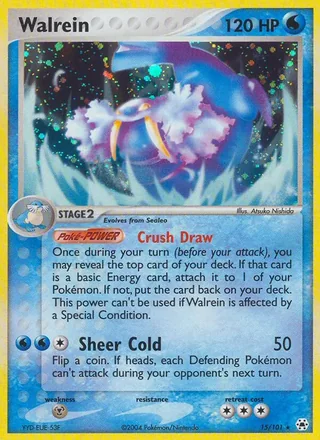
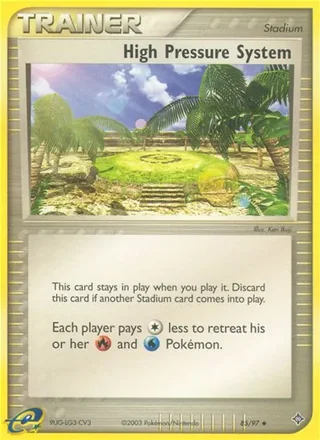
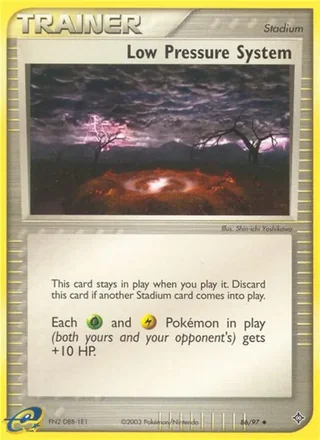
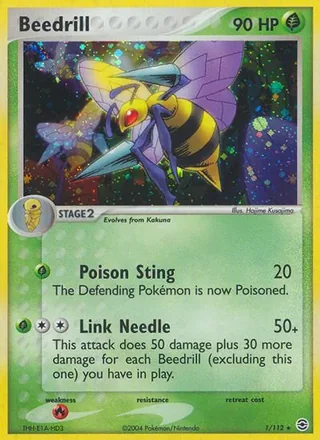
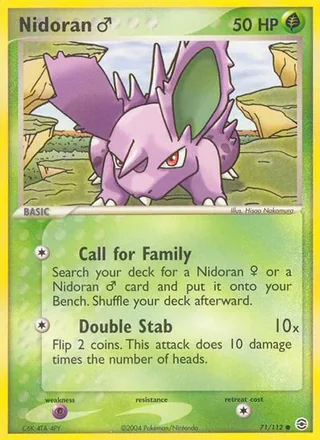
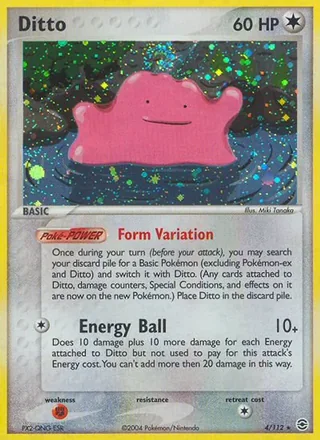
HP, type, stage, retreat cost, attacks and illustrator are read off the English twin of each card. Matching is by exact name first, normalised for punctuation and for the Nidoran gender signs; where the English set prints the same Pokémon twice — Mr. Mime ex is the 2004 case, printed at 110 and 111 — the two are told apart by rarity tier and then by perceptual hash. 329 of the 332 cards matched by name. The three that did not are not Japanese-only, they were simply printed in a different English set: High Pressure System and Low Pressure System are EX Dragon 085 and 086, and 071 Dark Celebi is EX Hidden Legends 004. All three are read from those records, so every card in the set has an illustrator and a full attack line.
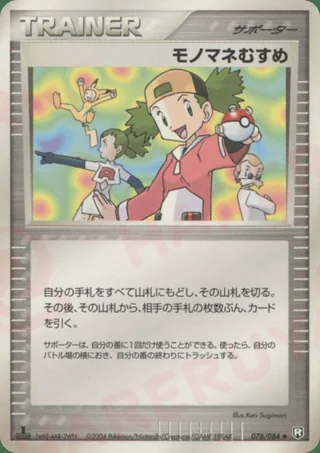
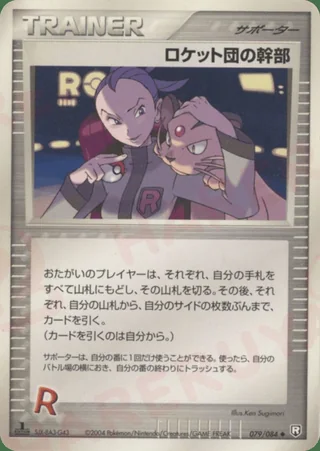
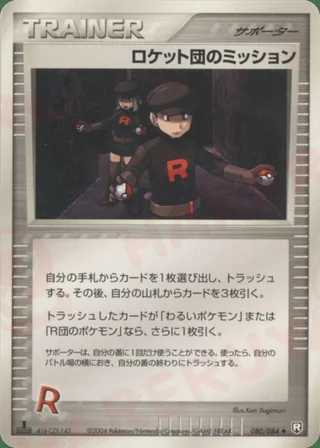
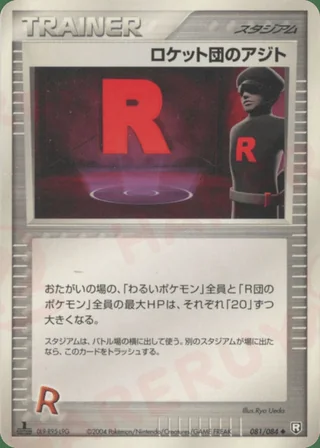
Japanese names appear for Pokémon only. Every Pokémon name here is the official Japanese species name from the species table. Trainer and Energy cards carry no Japanese name, and neither do the Rocket's cards: their Japanese titles are ロケット団の… and there is no Japanese card face in our sources to check the exact wording against. A missing line is better than an invented one.
Pokémon-ex and Pokémon ☆ are counted as holofoils and labelled separately. Both are holofoil cards, so both belong in the holo total — but they are different things to own, and the page marks them HOLO RARE ex and HOLO RARE ☆ rather than folding them into the ordinary holofoil count. ☆ cards are rarer than ex cards by a wide margin and the distinction matters more than any other on this page.
What is still missing. The pack itself: wrapper artwork, the price at release, what you had to do to buy one, and the shop link for the sealed product. None of that is in the card databases this almanac is built from, and none of it is guessed here. It is a standing task for every year on the site, and 2004 is no different.
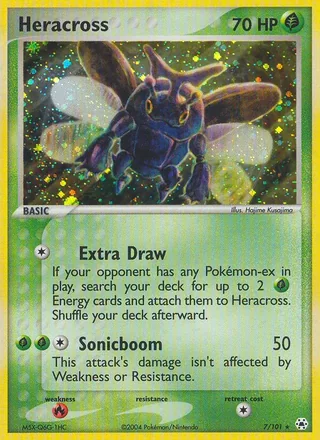
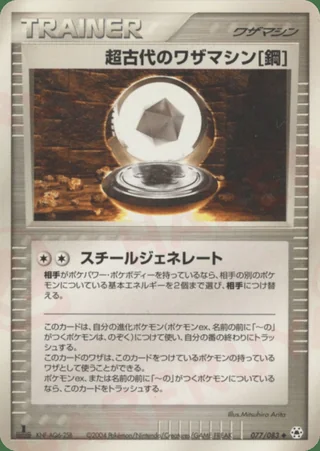
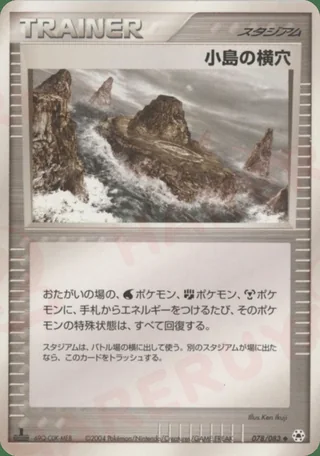
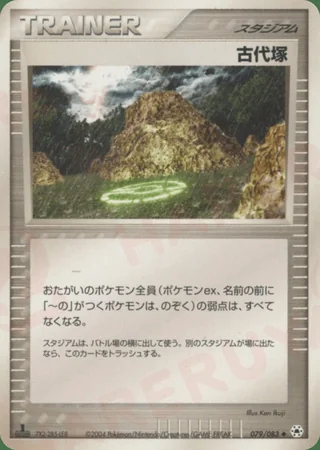
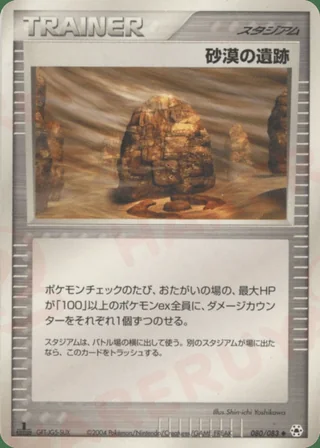
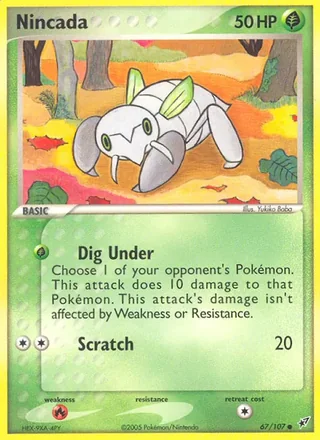
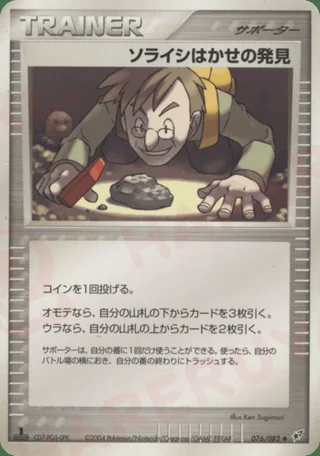
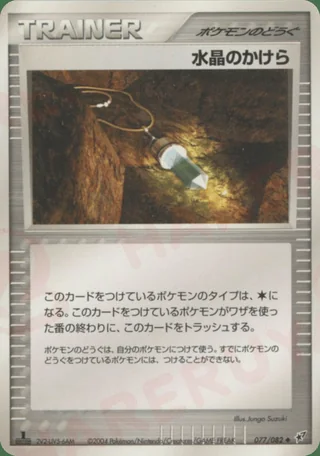
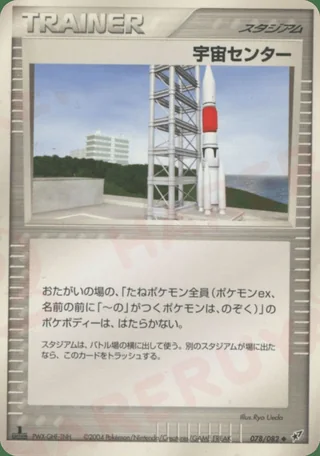
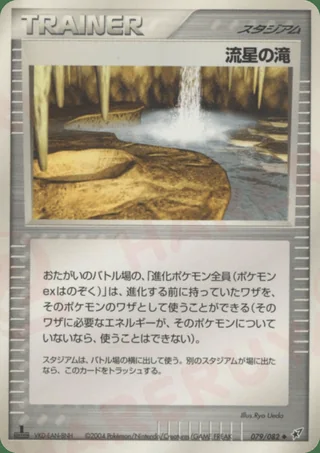
Some card faces are English scans. The Japanese scans come from a site that throttles hard — one image every thirteen to forty-five seconds — so the pages were built while the download was still running. Every card that fell back to the English printing of the same illustration is marked English scan underneath, and the mark is removed as Japanese scans arrive.