

Quick answer
Of the 2,785 distinct cards in Bandai’s One Piece database, 651 — about one in four — appear under more than one product code. Those cards account for 880 extra printings on top of their first one. The card carried forward most often is OP01-016, a Nami, which Bandai lists under six products. CardSpicy indexes every printing of every One Piece card, and this page is what that list looks like when it is read the other way round.
A reprint is not a second card. It keeps the card number, the stats and the effect, and it exists in the database as a separate entry only because it shipped somewhere else.
Most writing about One Piece cards talks about what is new in a set. The more useful question for a collector is what came back: which cards a new product carries forward from products that are already out, and how many times a given card has come round again. That is a fact the official database records plainly — every printing is its own entry, and every entry says which product it belongs to — so it can be counted rather than guessed. This page does the counting.
How a card ends up in more than one set
Bandai’s card database files every printing as its own row. When a card is carried into a later product, the row keeps the original card number and gains a suffix: OP01-016 is the first printing, OP01-016_p4 is another printing of the same card that shipped in OP-05. The suffix tells you the row is not the original printing; the product the row sits under tells you where that printing went.
That is why two products can both claim the same card, and why adding up “cards per set” gives a number larger than the number of cards that exist. OP01-016_p4 is not a new Nami: it is the Nami you already knew, printed again for a different product.
How far the reprinting goes
Read across every card in the database and the pattern is short-tailed: most cards are printed once and never again.
| Products the card appears in | Cards |
|---|---|
| 1 | 2,134 |
| 2 | 471 |
| 3 | 137 |
| 4 | 38 |
| 5 | 4 |
| 6 | 1 |
Two-thirds of the card pool has never been carried anywhere. The cards that have been are concentrated: 471 cards appear in two products, 137 in three, and only 43 in four or more. A card that has come round twice is not unusual; a card that has come round five times is genuinely rare, and there are four of them.
Which products carry older cards forward
The work is not spread evenly. Counting each older card once per product that carries it, the products doing the carrying are led by the two premium boosters and the promo channel:
| Product | Earlier cards carried into it |
|---|---|
Promo |
178 |
PRB-02 |
140 |
Other |
139 |
PRB-01 |
107 |
EB-02 |
26 |
ST-24 |
10 |
ST-23 |
10 |
ST-26 |
10 |
ST-27 |
10 |
ST-36 |
10 |
ST-15 |
10 |
ST-19 |
10 |
A numbered booster wave in the OP series brings forward roughly ten older cards or fewer, and a starter deck about the same. PRB-01 and PRB-02 are a different kind of product: they exist to bring earlier cards to players who missed them, and between them they account for 247 of the 880 carried-forward printings on this page. The promo channel is the other big one, because promos are handed out as events happen rather than designed as a set.
The twenty most-reprinted cards
Sorted by how many products carry them, then by card number. The product list is every product the database files a printing of that card under, including the promo and “other product” channels.
| Card | Character | Products | Listed in |
|---|---|---|---|
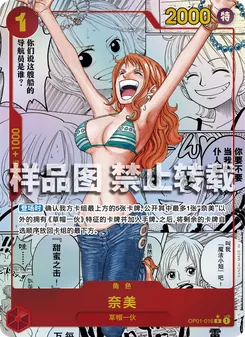 OP01-016 |
Nami | 6 | OP-01, ST-10, OP-05, PRB-01, ST-31, Other |
 OP02-106 |
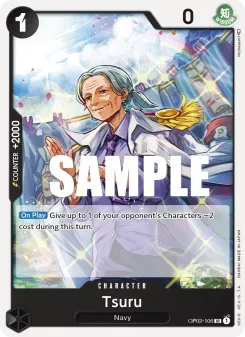
Tsuru | 5 | OP-02, ST-19, PRB-01, Other, Promo |
 OP04-083 |
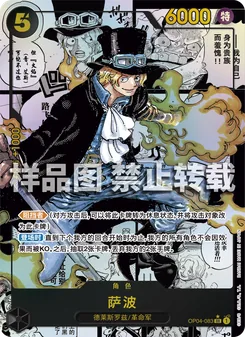
Sabo | 5 | OP-04, PRB-01, PRB-02, Other, Promo |
 OP07-021 |
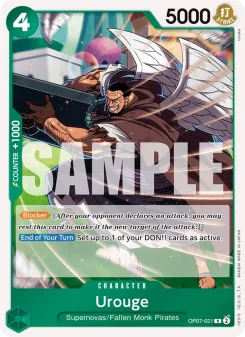
Urouge | 5 | OP-07, OP-10, ST-24, PRB-02, Promo |
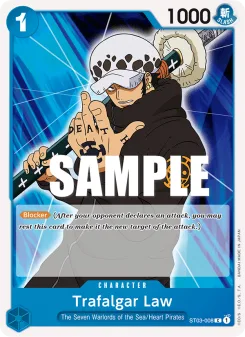 ST03-008 |
Trafalgar Law | 5 | ST-03, ST-17, PRB-01, Other, Promo |
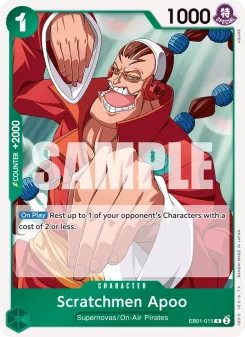 EB01-015 |
Scratchmen Apoo | 4 | EB-01, ST-24, PRB-02, Promo |
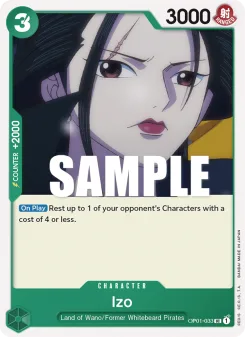 OP01-033 |
Izo | 4 | OP-01, PRB-01, Other, Promo |
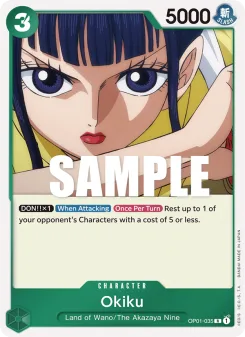 OP01-035 |
Okiku | 4 | OP-01, OP-07, Other, Promo |
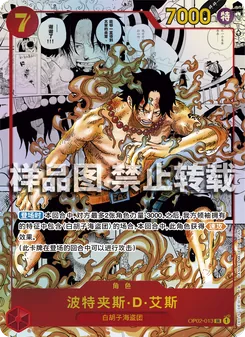 OP02-013 |
Portgas.D.Ace | 4 | OP-02, OP-08, PRB-01, Other |
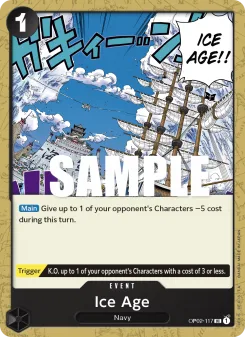 OP02-117 |
Ice Age | 4 | OP-02, ST-19, PRB-01, Other |
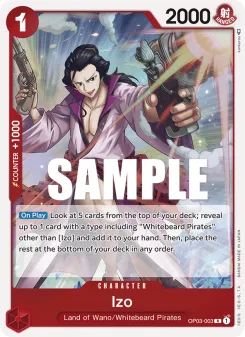 OP03-003 |
Izo | 4 | OP-03, OP-07, ST-15, PRB-01 |
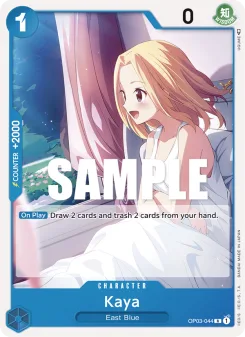 OP03-044 |
Kaya | 4 | OP-03, PRB-02, Other, Promo |
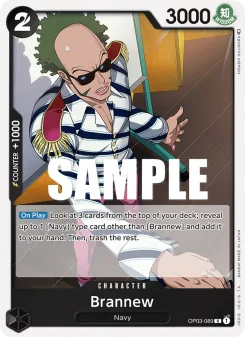 OP03-089 |
Brannew | 4 | OP-03, ST-19, PRB-01, Promo |
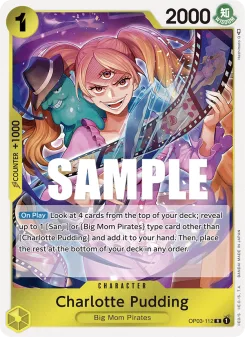 OP03-112 |
Charlotte Pudding | 4 | OP-03, OP-08, ST-20, Promo |
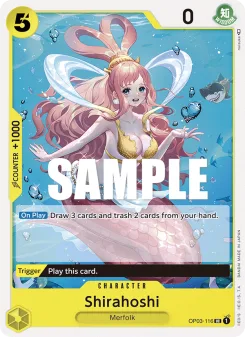 OP03-116 |
Shirahoshi | 4 | OP-03, PRB-01, Other, Promo |
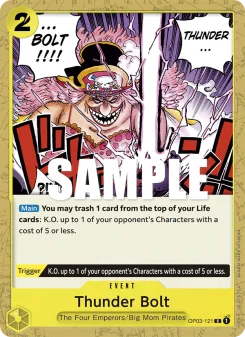 OP03-121 |
Thunder Bolt | 4 | OP-03, ST-20, PRB-01, Other |
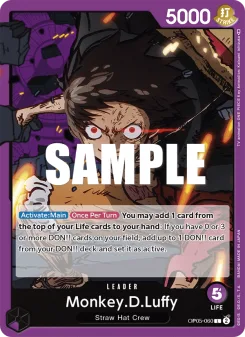 OP05-060 |
Monkey.D.Luffy | 4 | OP-05, ST-18, EB-02, Promo |
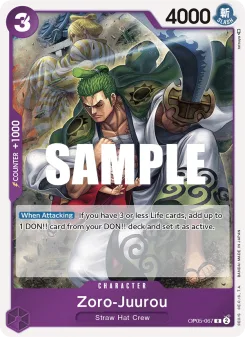 OP05-067 |
Zoro-Juurou | 4 | OP-05, ST-18, OP-09, Promo |
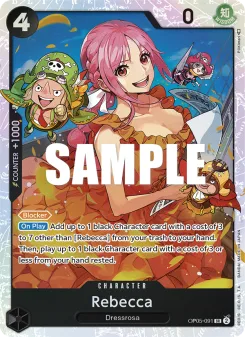 OP05-091 |
Rebecca | 4 | OP-05, OP-06, PRB-02, Promo |
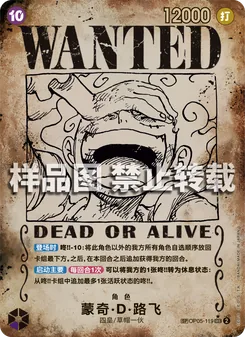 OP05-119 |
Monkey.D.Luffy | 4 | OP-05, PRB-01, OP-09, OP-11 |
It is worth noticing who is on that list. Cards that are reprinted a lot tend to be cheap, useful, low-cost cards rather than showpieces: a card that belongs in a beginner’s first deck gets printed again so that a beginner can get it, which is the opposite of what happens to the scarce cards. Reprinting and scarcity run in opposite directions, and the list above is that fact in table form.
Frequently asked questions
How many One Piece cards have been printed more than once?
651 of 2,785, which is about one in four. They account for 880 extra printings between them.
Which One Piece card has been printed the most times?
OP01-016, a Nami from the first booster wave. The database files printings of it under six products: OP-01, OP-05, PRB-01, ST-10, ST-31 and the promo channel.
Are reprints worth the same as the original printing?
They are the same card with the same number and the same effect, so any difference between them is a difference in printing, not in the card. This site quotes no raw-card prices, for the reason given at the foot of the page.
Which sets reprint the most old cards?
PRB-01 and PRB-02, the two premium boosters, which between them carry forward 247 earlier cards. A normal numbered booster wave carries forward about ten or fewer.
Does a reprint keep the original card number?
Yes. A reprint keeps the number of the first printing and adds a suffix, so OP01-016_p4 is the same card as OP01-016, printed for a later product. The suffix changes, the card does not.
Sources
Sources and further reading
- Bandai — the official One Piece Card Game card database for the English edition, and its product list, the source of every card number, suffix and product code here.
- CardSpicy — the full set-code list, which walks the same products in release order with their card counts.
- CardSpicy — how many One Piece cards there are, for why the per-set counts add up to more than the card pool.
- CardSpicy — alternate art treatments, for the other thing a suffixed entry can mean.
- CardSpicy — every release, in order, where each product is shown with the cards inside it.
Card statistics on this page are counted from Bandai’s own card database at the date shown, so they move as the database is updated. Prices are not quoted here: this site prices graded cards in US dollars from observed sales, and a raw-card figure would be a different number measured a different way. Where a card is described as part of a set, the set code and release date are the English edition.
Related reading
- One Piece Card Set Codes, Listed in Full
- Alternate Art Treatments on One Piece Cards
- How Many One Piece Cards Are There?
- Every One Piece Set in Order
Where to go next
- The CardSpicy card index — every card we track, with its PSA 10 population and market history (195 cards).
- The illustrator index — every artist behind those cards, card by card (110 artists).
Leave a Reply