


Sealed companion to Era 7, Black & White. Part of the twelve-era timeline. No sealed prices quoted.
Quick answer
Black & White is the first era where keeping a box sealed became a decision a normal buyer made on purpose. Before it, sealed survival was a by-product: boxes survived because they were unsold, forgotten, or too expensive to open. From 2010 onward, a visible share of buyers bought boxes specifically to keep them.
That single change explains something that otherwise looks impossible: a 2011 Black & White box is easier to find sealed today than a 2009 HeartGold & SoulSilver box, and much easier than a 2008 Diamond & Pearl box. Nothing about the print volume explains it. The behaviour of the people who bought it does.
The line, and the two halves of the era
Black & White runs eleven English sets across three years, and it divides cleanly in the middle: the early sets are a transition, and the later sets are recognisably modern.
| Set | Release | Why it matters for sealed product |
|---|---|---|
| Black & White | April 2011 | First set of the era; new frame, new back-of-pack design |
| Emerging Powers | August 2011 | Small set, short print life, the era’s least collected box |
| Noble Victories | November 2011 | Full-art supporters debut; the era’s first collector-driven box |
| Next Destinies | February 2012 | Pokémon-EX debuts; the box’s contents structure changes permanently |
| Dark Explorers | May 2012 | Strong competitive set; high opening rate, low sealed survival |
| Dragons Exalted | August 2012 | Dragon-type chase structure |
| Boundaries Crossed | November 2012 | Large set; the era’s best-supplied box |
| Plasma Storm / Blast / Freeze | 2013 | Team Plasma block; three sets in eight months |
| Legendary Treasures | November 2013 | Reprint-heavy set; the end of the era |
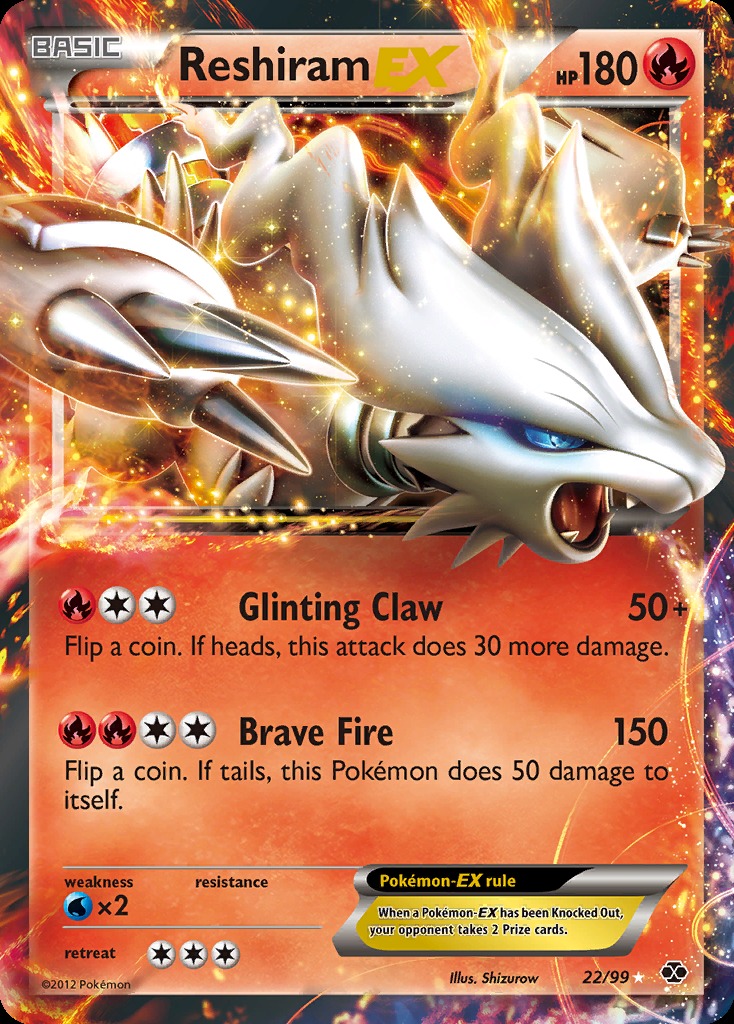
The split matters for a practical reason. Before Next Destinies, the highest-value card in a box was a full-art supporter — a card whose appeal is collector-driven. After Next Destinies, the highest-value card was a Pokémon-EX, and Pokémon-EX cards were also the most playable. Collection demand and play demand pointed at the same cards, which raised the pressure to open.
Why the survival rate jumped
Four things changed between 2009 and 2011, and only one of them was inside the product.
- A secondary market matured. By 2011 there were dedicated sealed-product sellers with public listings. A buyer could see what a sealed box was worth without opening it, which made keeping it a calculable choice rather than a hunch.
- Video box openings became a format. The audience for opening content arrived in this period, which had two opposite effects at once: it increased opening, and it increased the number of people who bought two boxes, opened one and kept one.
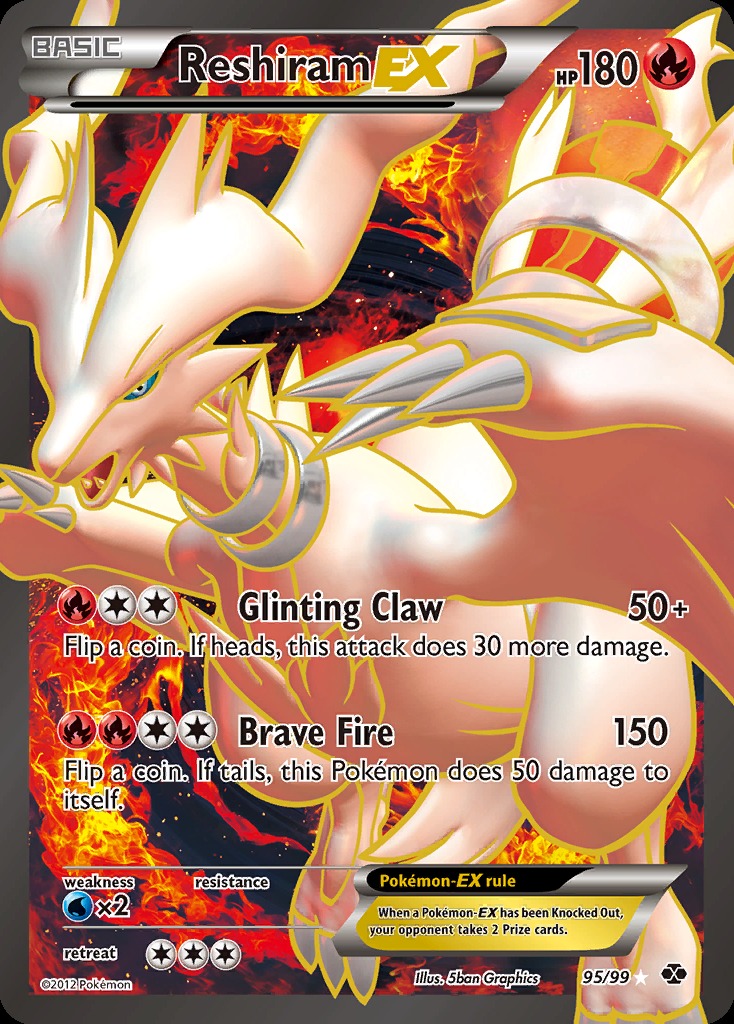
- Full art widened the collector base. Full-art supporters were the first modern cards whose appeal was entirely about how they looked. That brought in buyers who were not players, and non-players keep things.
- The packaging got harder to damage. Black & White boxes use a coated board and a heavier wrap than the LEGEND era, so the physical survival rate improved independently of behaviour.
The third of those is the one that gets overlooked. The full-art supporter is the first card in the modern era designed to be collected rather than played, and the people who collect things keep the packaging.
The failure mode this era introduced
Black & White products introduced a failure that later eras inherited: the printed shrink band.
Instead of wrapping the whole box, some products in this era used a printed band around the middle. The band carries the set logo and often a promo message, and it is the first thing to tear. A torn band is not the same as a broken seal — the box underneath can be perfectly sealed — but it removes the only external evidence of factory packing, which makes the box harder to sell and harder to authenticate.
The second characteristic failure is corner whitening on the coated board. Because the board is coated, a knock takes the coating off and leaves a bright white spot rather than a dent. This is cosmetic, but it is the single most common reason a sealed box from this era is described as less than mint.
What is scarce here, and what is not
The era’s scarcity is unevenly distributed and does not follow print volume.
- Common: booster boxes of the large sets — Boundaries Crossed, Legendary Treasures, Black & White base. These were printed heavily and kept heavily.
- Scarce: the small mid-era sets. Emerging Powers and the three Plasma sets had short retail lives, and the Plasma block shipped three sets in eight months, which compressed the window in which any one of them was the current product.
- Scarce and under-watched: the blister and three-pack formats. These were retail-only, opened on purchase by children, and almost never kept. They are the same structural gap as in every earlier era.
- Scarce for a different reason: Dark Explorers. It was a strong competitive set, so a high proportion of its print run was opened by players rather than kept by collectors.
That last one is the useful lesson. In a modern era, playability suppresses sealed survival more than print volume does, because players open and collectors keep.
Storing this era’s product
The coated board makes this era easier to store than the two before it, and the failure to prevent is mechanical rather than environmental.
Do not stack boxes directly on each other without a barrier. Coated board against coated board under weight produces scuff marks that read as white haze, and that haze is exactly what a buyer looks for first. A sheet of acid-free paper between boxes is enough.
Keep the printed band intact. If it is already torn, do not tape it: tape residue is worse than a tear, and a taped band reads as a repair attempt. Store the box so the band is not under tension — upright, not flat under weight.
Humidity is less of an issue because of the coating, but wrapped boxes in a humid room fog on the inside of the film, and that fog does not clear. Keep them dry.
For the singles, the era’s defining cards are full-art supporters and Pokémon-EX. Full arts have a large, unbroken foil area, which means surface marks are highly visible and highly penalised. A matte sleeve then a rigid toploader is the baseline; for a high-value full art, a press-fit case avoids the insertion abrasion that a toploader puts across the foil. A display slab is the right call if the point of the card is the artwork, which for a full art it usually is.
Where this sits
The Black & White sealed line follows the LEGEND sealed page, where boxes were weakest and opened most, and is followed by the XY sealed page, where reprints entered the sealed logic. For the card-level story see Era 7.
Frequently asked questions
Why is Black & White easier to find sealed than Diamond & Pearl?
Because buyers in 2011 had a reason to keep boxes that buyers in 2008 did not. A public secondary market and a collector-driven card type both arrived in between. Print volume does not explain the difference.
What is a Pokémon-EX and when did it start?
A card tier introduced in Next Destinies in February 2012, distinct from the lower-case ex cards of the 2003–2007 era. Pokémon-EX cards were both the most playable and the most collected cards of their sets.
Is a torn shrink band a problem?
It is not a broken seal, but it removes the external evidence of factory packing. A box with a torn band and an intact wrap is still sealed; a box with a torn band and no wrap should be inspected closely.
Which Black & White set is scarcest sealed?
The small mid-era sets and the three Plasma sets, because their retail windows were short. Dark Explorers is scarce for a different reason: it was played, so it was opened.
Are full-art supporters harder to grade than other cards?
Yes, in practice. The foil covers most of the card with no break, so any surface mark sits on a continuous reflective field where it is immediately visible.
What this era’s product actually looks like
Full art is the era’s defining visual change, and the difference between a standard card and its full-art counterpart is the clearest illustration of why the collector base widened here.

Sources
Sources and further reading
- Nintendo — Black & White, April 2011, and the eleven English sets through Legendary Treasures, November 2013.
- Nintendo — full-art cards from Noble Victories, November 2011; Pokémon-EX from Next Destinies, February 2012.
- CardSpicy — Era 7, for full art’s introduction and the era’s card structure.
- CardSpicy — What is in a Pokémon booster box, for pack configuration by era.
- CardSpicy — Storing sealed Pokémon boxes.
- CardSpicy — How to spot a resealed box.
Related reading
- Era 7 — Black & White, 2010 to 2013 — full art, print lines, and the era’s ceiling.
- Sealed LEGEND product — the era before, and the worst box construction in the hobby.
- Sealed XY product — where reprints complicated the sealed market.
- All twelve Pokémon card eras.
- Booster boxes or singles — the economics that decide which survives.
- Storing sealed boxes.
Nothing on this page is investment advice, and no sealed product is offered for sale here. Release dates are as published by the manufacturer; survival descriptions are structural and are not population figures.
Where to go next
- The CardSpicy card index — every card we track, with its PSA 10 population and market history (195 cards).
- The illustrator index — every artist behind those cards, card by card (110 artists).
Leave a Reply