


Sealed companion to Era 9, Sun & Moon. Part of the twelve-era timeline. No sealed prices quoted.
Quick answer
Sun & Moon is the first era where the box itself became a graded object, and that changed what a sealed box is. Before this era, a sealed box was priced as a container: its value came from what was inside it plus a scarcity premium for the container. From 2016 onward, grading companies began accepting unopened product, which means the box now carries its own condition grade, independent of its contents.
The result is a market with two prices for the same object — one for a box that is sealed, and a higher one for a box that is sealed and graded well. Once that split exists, the physical condition of packaging becomes a thing worth protecting, which was never true before.
The line
Sun & Moon runs eleven English sets across three years, and it is the last era before the modern print volume explosion.
| Set | Release | Sealed significance |
|---|---|---|
| Sun & Moon | February 2017 | First set; GX cards debut; full-art supporters at their most collected |
| Guardians Rising | May 2017 | Strong playable set; high opening rate |
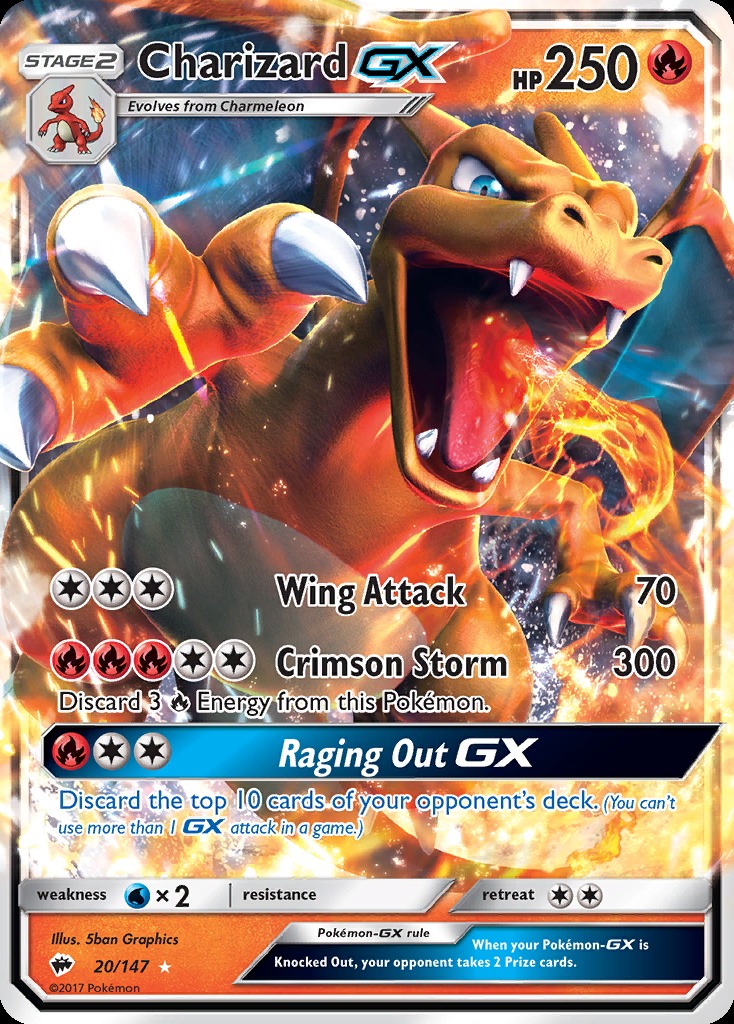
| Burning Shadows | August 2017 | Charizard-GX; the era’s most opened box |
| Crimson Invasion | November 2017 | Weak reception; comparatively under-opened, which helps survival |
| Ultra Prism | February 2018 | Ultra Beast focus |
| Forbidden Light | May 2018 | Standard release |
| Celestial Storm | August 2018 | Standard release |
| Dragon Majesty | September 2018 | Special set with restricted distribution; the era’s short-supply product |
| Lost Thunder | November 2018 | Largest set of the era |
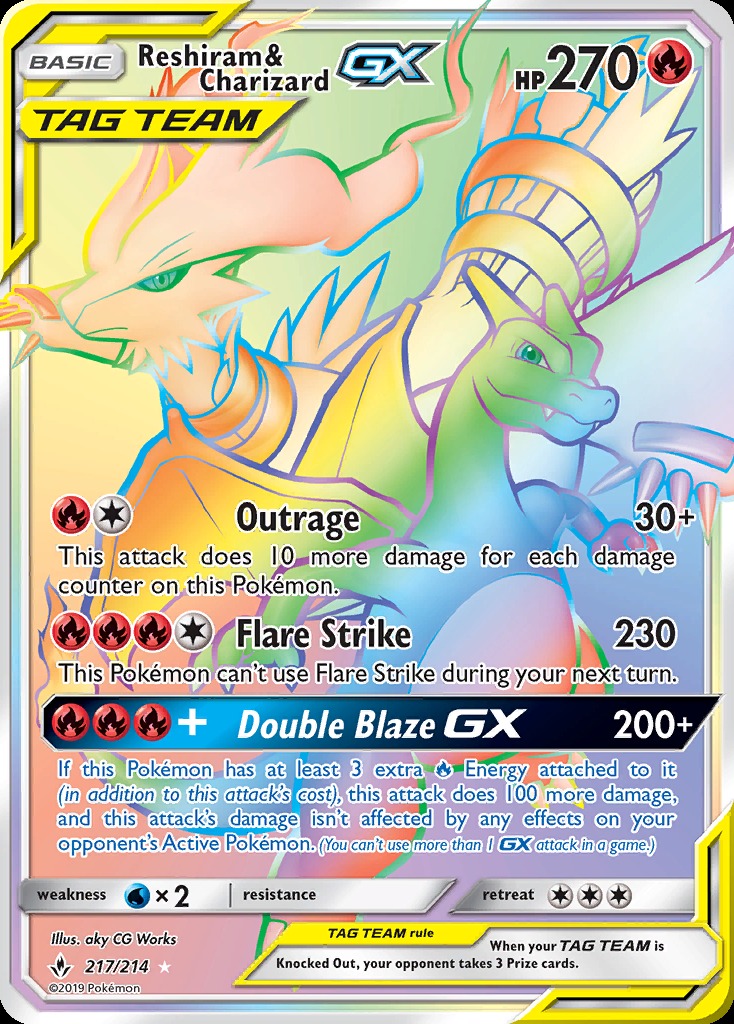
| Team Up | February 2019 | Tag Team cards debut |
| Unbroken Bonds / Unified Minds | 2019 | Tag Team at its densest |
Dragon Majesty is the odd one. It was a special set sold through a narrower channel than the main line, which gives it the same structural scarcity as Generations in the previous era: fewer units made because fewer outlets carried it, not because fewer people kept it.
Why grading the box changes the market
When a sealed box can be graded, three things follow, and all three are new in this era.
- Packaging damage becomes a price event. Before, a dented corner on a sealed box was cosmetic. After, it is a grade ceiling. That is the same shift that happened to cards when grading arrived in the 1990s.
- Authentication becomes a service. A graded box has been examined by a third party whose business depends on correctly identifying a reseal. That transfers the reseal risk from the buyer to the grader, which is the main reason buyers pay for it.
- The physical form gets frozen. A graded box is encased, which stops further handling damage. That means the surviving population of graded boxes can no longer degrade, while the ungraded population keeps degrading. Over time the two populations diverge in a way they cannot for cards, because cards are already usually encased.
The third point is the one with long-term consequences, and it is specific to sealed product. A card collection in sleeves degrades slowly. A box collection on a shelf degrades every time it is moved. Encasement stops that clock, and this is the era where that option first existed.
How these boxes fail
Sun & Moon product is well constructed, and its failure modes are about handling rather than materials.
The flap edge is the first thing to go. These boxes have a tuck flap with a scored fold, and the score line is where the printed layer wears through. On a box that has been opened and closed at retail, or moved repeatedly, the score line goes white.
The corners take crush rather than cracks. The board is thick enough that a knock dents rather than splits, which produces a soft corner rather than a broken one. A soft corner is a grade ceiling on a graded box and cosmetic on an ungraded one.
The wrap clouds at the folds. Handling flexes the film at the fold lines and the flexing produces a permanent dull band. Under raking light this reads as a defect; face-on it is invisible.
What is scarce here
- Dragon Majesty. Restricted distribution, so fewer units exist regardless of behaviour.
- Crimson Invasion. The era’s least popular set, which paradoxically means less was opened — but also that less was kept, so the effect roughly cancels and it stays cheap rather than becoming scarce.
- Blisters and three-pack formats. The same structural gap as every prior era. Retail-only, opened on purchase, essentially never kept.
- Graded boxes in high grade. This is the genuinely new scarce category, and it exists only from this era forward.
Storing this era’s product
If the box is ungraded, the goal is to stop the clock described above. Handle it as little as possible, and when you do, hold it by the faces rather than the edges — the edges are where the score lines and corners live.
Do not stack these flat under weight. Unlike the light-board eras, these boxes do not bow; they dent at the corners under load, and a corner dent is permanent. Store them upright in a rigid container, separated, with the wrap not touching anything abrasive.
If the box is graded, the case itself is now the object to protect. A graded box case is larger than a graded card case and does not fit standard storage, which is a real practical problem. Keep it out of sunlight and do not stack it under anything.
For the singles, the era’s cards are GX and Tag Team, both of which have a large foil area and a heavy ink laydown. Tag Team cards in particular pack two portraits and a dense text block into the same space, so the print quality is more variable than on simpler cards. A matte sleeve plus a rigid toploader is the baseline; for a high-value Tag Team, a press-fit case protects the edge that a toploader would abrade. A display slab is the natural home for the full-art supporters this era is known for.
Where this sits
The Sun & Moon sealed line follows the XY sealed page, where reprints complicated identification, and is followed by the Sword & Shield sealed page, where print volume and retention both hit their peak. For the card-level story see Era 9.
Frequently asked questions
Can a sealed booster box be graded?
Yes. Grading companies began accepting unopened product during this era, and the service grades the packaging rather than the contents. It is the main reason box condition became a priced attribute.
Is a graded box worth more than an ungraded one?
Usually, because the grade transfers the reseal risk to the grader and freezes further degradation. Whether the premium is worth the cost depends on the specific box, which is why this page does not quote figures.
Which Sun & Moon set is scarcest sealed?
Dragon Majesty, because it was sold through a narrower channel than the main line. Its scarcity comes from distribution rather than from survival.
Why do Sun & Moon boxes dent instead of bow?
The board is thicker than in earlier eras. A thicker board resists bending, so a knock produces a corner dent or crush rather than a curve across the face.
Are Tag Team cards harder to grade than single-character cards?
In practice, yes. Two portraits, a denser text block and a heavier ink laydown give more places for a print or surface issue to appear on an otherwise clean card.
What this era’s product actually looks like
GX and Tag Team changed the card’s information density, and the full-art supporter became the era’s flagship collectible.
Sources
Sources and further reading
- Nintendo — Sun & Moon, February 2017, and the eleven English sets through Unified Minds, 2019.
- Nintendo — Dragon Majesty, September 2018, sold through a restricted channel.
- Nintendo — Tag Team cards from Team Up, February 2019.
- CardSpicy — Era 9, for GX, Tag Team and the era’s card structure.
- CardSpicy — How to read a population report, for the grading-side view.
- CardSpicy — Storing sealed Pokémon boxes.
Related reading
- Era 9 — Sun & Moon, 2016 to 2019 — GX, Tag Team, and the era when characters outran the Pokémon.
- Sealed XY product — the era before, and the reprint problem.
- Sealed Sword & Shield product — peak print volume, peak retention.
- All twelve Pokémon card eras.
- Reading a population report.
- Booster boxes or singles.
Nothing on this page is investment advice, and no sealed product is offered for sale here. Release dates are as published by the manufacturer; the grading-of-sealed-product service is described generically and is not an endorsement of any company.
Where to go next
- The CardSpicy card index — every card we track, with its PSA 10 population and market history (195 cards).
- The illustrator index — every artist behind those cards, card by card (110 artists).
Leave a Reply